
Table of Contents
- Introduction – Where Your Money Goes When You Buy a Tool
- How Manufacturing Left America
- The Real Cost of Cheap Overseas Tools
- Why Buying American Keeps Money at Home
- Jobs, Communities, and the Ripple Effect
- It Doesn’t Have to Be American, Just Not Our Enemies
- Tools Still Made in America or Friendly Countries
- How to Find Out Where Your Tools Are Made
- FAQ
- Your Next Tool Purchase Is a Vote, Make It Count
Introduction
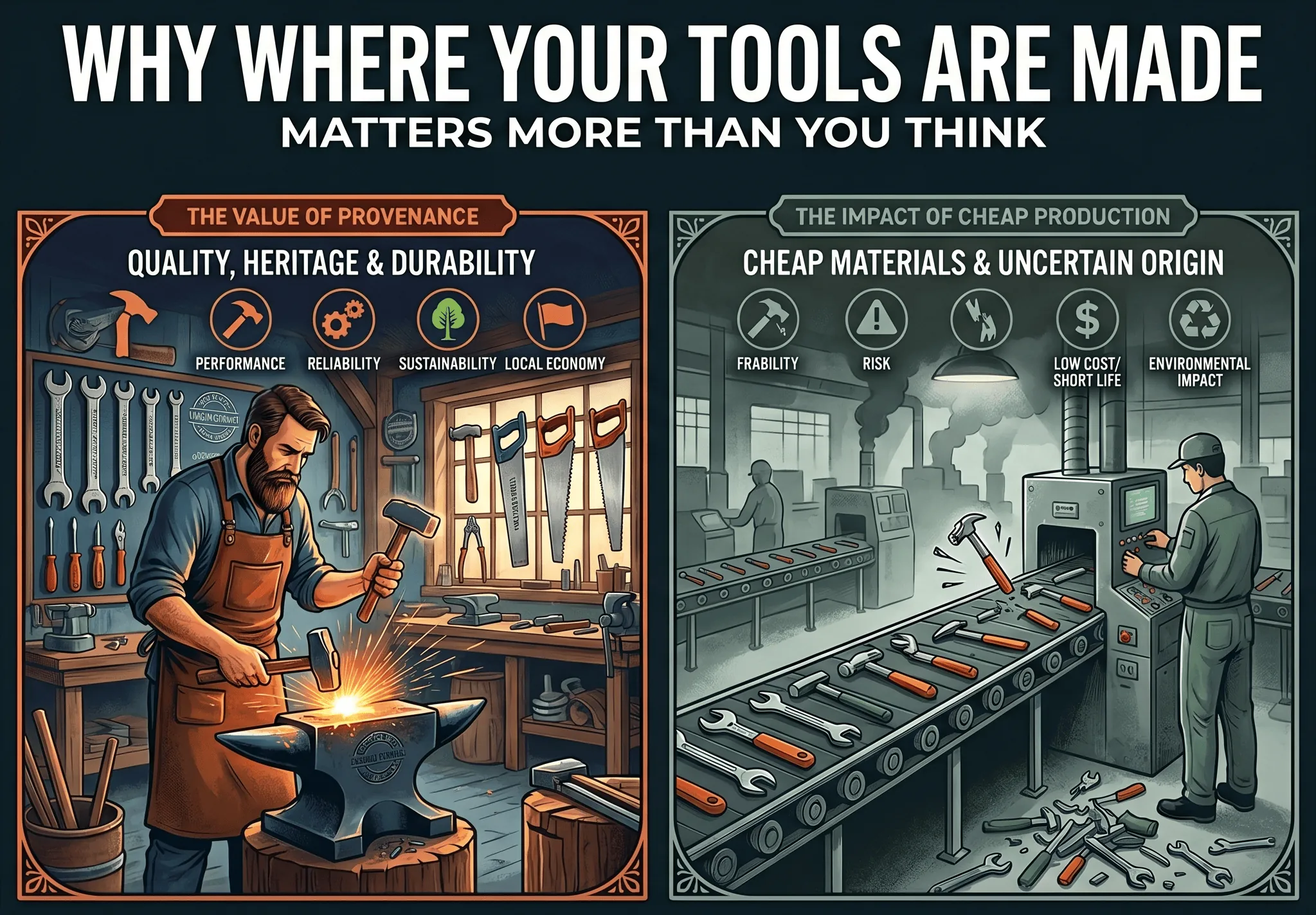
Most people pick up a tool at the hardware store and think about two things. Does it look like it will do the job, and what does it cost? Where it was made, who made it, and where the money goes when they buy it never enters the conversation.
That’s understandable. Nobody stands in the tool aisle running an economic analysis. You need a drill, you buy a drill.
But here’s the thing. Every purchase you make is a decision about more than the thing you are buying. It’s a decision about who you are supporting, what kind of economy you want to live in, and in some cases what countries and governments you are putting money into. And when it comes to tools, those decisions add up in ways that matter a lot more than most people realize.
This is not about guilt. It’s about awareness. Once you know where your tools are made and what that actually means, you can make a more informed choice. And informed choices, made by enough people, can change markets, support American workers, and send a message that where something is made still matters.

How Manufacturing Left America
It did not happen overnight. American manufacturing didn’t collapse in a single moment. It eroded over decades through a series of decisions that each seemed reasonable at the time, but collectively produced a result that nobody would have voted for if they had seen it coming.
It started with trade policies that opened American markets to foreign goods without demanding equivalent access to foreign markets in return. Then came the offshoring wave as companies discovered they could manufacture in countries with dramatically lower labor costs and ship the goods back to America cheaper than they could make them here. The factories closed one by one. The jobs went with them. The communities built around those factories hollowed out slowly and quietly.
The tool industry was not immune. Brand after brand got acquired, consolidated, or moved production overseas. Names that had meant American-made for generations became labels on products manufactured elsewhere. Sometimes the quality held up. Often it didn’t. But prices fell, and for a long time that was enough to keep consumers buying without asking too many questions.
The Real Cost of Cheap Overseas Tools
The sticker price is not the whole price. That’s true for a lot of things and it is especially true for tools.
A cheap tool that breaks after a year and needs to be replaced twice costs more than a quality tool that lasts twenty years. That’s math that most people understand but don’t always apply in the moment when the cheap option is sitting right there looking like a good deal.
There are also costs that don’t show up on the receipt at all. The job that takes longer because the tool doesn’t perform the way it should. The project that has to be redone because the equipment wasn’t precise enough. The safety risk that comes with tools that cut corners on materials and engineering. These are real costs that the sticker price never captures.
And then there are the broader costs. The American worker who didn’t get hired because the production went overseas. The community that lost its tax base when the factory closed. The supply chain vulnerability that shows up when international shipping gets disrupted, and the tools you need are sitting on a container ship somewhere in the Pacific. None of that shows up at the register, but all of it is part of the real cost of cheap overseas manufacturing.

Why Buying American Keeps Money at Home
When you buy a tool made in America by an American company the money does something very different than when you buy one made overseas. It stays here.
The American worker who made the tool spends their paycheck at local businesses. Those businesses pay local taxes. The company pays corporate taxes that fund roads, schools, and infrastructure. The suppliers who provide materials to the manufacturer employ their own workers who do the same thing. The economic activity generated by domestic manufacturing ripples outward through communities in a way that offshore production simply cannot replicate.
Economists call this the multiplier effect. Every dollar spent on domestically produced goods generates more economic activity than the same dollar spent on imported goods because more of it circulates within the domestic economy before leaking out. For manufacturing the multiplier is significant. A healthy domestic manufacturing sector is not just good for the workers directly employed in it. It is good for the entire economic ecosystem around it.
Jobs, Communities, and the Ripple Effect
The towns that were built around American manufacturing tell the story better than any economic statistic. Drive through the industrial Midwest, and you will see what happens to a community when the factories close. The downtown empties out. The tax base shrinks. The schools lose funding. The young people leave for opportunities somewhere else, and the ones who stay struggle to find work that pays what the factory did. I live in Illinois and can tell you how Rockford, Illinois has changed from the 70’s to today. It’s crazy how a booming town just dried up and became what it is today: empty buildings and places that look like a third-world country.
That’s not an abstraction. That’s real people in real places dealing with the consequences of manufacturing decisions made in boardrooms by people who never had to live in those towns.
On the flip side, look at what happens when manufacturing comes back to a community. The direct jobs are just the beginning. Every manufacturing job supports multiple additional jobs in the local economy. The suppliers, the service businesses, the restaurants and retailers that serve the workers. The school budgets that benefit from the increased tax base. The young people who have a reason to stay.
Buying tools made in America is a small thing. But small things done consistently by enough people add up to something much larger.
It Doesn’t Have to Be American, Just Not Our Enemies
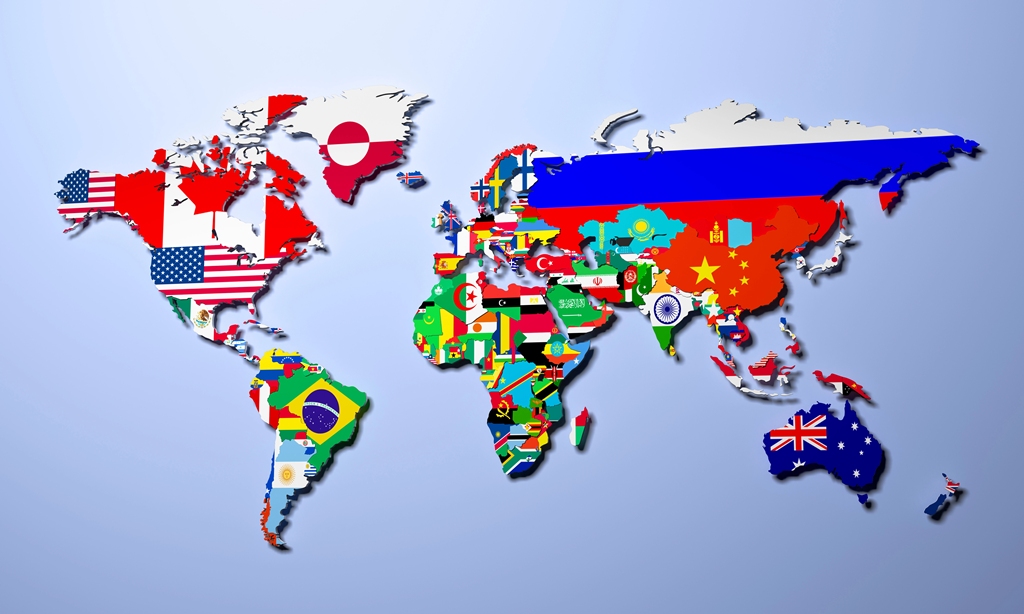
This is an important nuance that gets lost in the “Buy American” conversation. The goal is not to refuse every product that wasn’t made on American soil. That’s not realistic, and in some cases it’s not even the right call. There are allied countries with strong manufacturing traditions, fair labor practices, and economic relationships with America that are genuinely beneficial to both sides.
Germany makes excellent tools. Japan has a long tradition of precision manufacturing. Canada, Australia, and the United Kingdom are countries with aligned values, fair trade relationships, and manufacturing sectors that support workers with real protections and real wages.
The distinction that matters is not strictly American versus foreign. It’s democratic, allied, and fair versus authoritarian, adversarial, and exploitative. A tool made in Germany by a well-paid German worker in a country that is a NATO ally is a very different purchase than a tool made by a state-influenced manufacturer sending profits back to a government that does not share our values or our interests, and uses the money against us.
Know the difference and shop accordingly.
Tools Still Made in America or Friendly Countries
The options are better than most people think. You just have to know where to look.
Klein Tools is still family-owned and still manufacturing in America. Channellock has been making pliers in Meadville, Pennsylvania since 1886 and still does. Estwing makes their hammers in Rockford, Illinois. Starrett makes precision tools in Athol, Massachusetts. These are real American companies making real American products, and they deserve the business.
In the friendly country category, Festool comes from Germany and represents some of the finest woodworking tools available anywhere. Fein, also German, makes excellent power tools with a long professional track record. Hilti is headquartered in Liechtenstein and manufactures with the quality standards you would expect from a company rooted in Central European manufacturing tradition.
These brands are not always the cheapest option on the shelf, yet they are almost always worth it.
How to Find Out Where Your Tools Are Made
It takes about two minutes, and it is worth doing before you hand over your money.
Start with the packaging. Made in USA, Made in Germany, etc.- it is usually right there if you look for it. Sometimes it is in small print on the back or bottom of the box, but it is there. If it is not on the packaging, check the manufacturer’s website. Most companies that make their products domestically or in allied countries are proud of it and say so prominently.
You can also look up the parent company. A lot of tool brands that sound American are owned by foreign corporations. Milwaukee is owned by TTI in Hong Kong. Ryobi is also TTI. DeWALT is owned by Stanley Black and Decker, which is American but manufactures much of its product overseas. Knowing who owns the brand and where the money ultimately goes is part of making an informed decision.
There are also online communities of tool enthusiasts, particularly in the trades, who track this information obsessively and share it freely. A quick search will usually tell you everything you need to know about where a specific tool or brand actually comes from.
FAQ
Does it really make a difference if I buy American made tools?
Yes but not just in the way most people think. One purchase by one person is a small thing. But purchasing patterns by millions of people over time shape what retailers stock, what manufacturers produce, and what brands survive. Every time enough consumers prioritize domestic production retailers and manufacturers pay attention. Your purchase is a signal and signals add up.
Are American made tools always better quality?
Not automatically. Made in America is not a guarantee of quality any more than made overseas is a guarantee of poor quality. What it does mean is that the production is subject to American manufacturing standards, American labor practices, and in most cases a higher level of accountability to the domestic market. The best American made tools are genuinely excellent. The worst are still generally better than the cheapest imports. Quality and origin are related but they are not the same thing.
Why are so many tool brands owned by foreign companies now?
The consolidation of the tool industry over the last thirty years mirrors what happened in manufacturing broadly. Private equity, foreign investment, and the economics of scale drove a wave of acquisitions that put many formerly American brands under foreign ownership. TTI in Hong Kong owns Milwaukee and Ryobi. Stanley Black and Decker has acquired numerous brands over the years. The name on the tool often has very little to do with who owns the company or where the profits go.
What if the American made option costs significantly more?
That is a real consideration and there is no one size fits all answer. For a professional who uses tools every day the quality and durability of a domestically made tool usually justifies the price difference over time. For a casual DIYer the calculus is different. What we would say is that the price gap is often smaller than people expect once you factor in longevity and that even choosing American made for your core tools while accepting overseas production on less critical items is better than not thinking about it at all.

Your Next Tool Purchase Is a Vote, Make It Count
Nobody is asking you to throw away the tools you already own or to refuse every product that wasn’t made on American soil. That’s not the point and it’s not realistic. The point is awareness and intention going forward.
The next time you are standing in the tool aisle with two options in your hands, one made in America by an American company and one made by a foreign-owned corporation, you now know what that choice actually means. It’s not just about the tool. It’s about the worker who made it, the community that factory supports, the economy that benefits when that money stays here, and the message you send to retailers and manufacturers about what you value.
The brands that are doing it right – the ones still manufacturing here, still employing American workers, still refusing to chase the cheapest production cost at the expense of quality and community, they need your business. They are competing against companies with foreign capital, lower cost structures, and marketing budgets that dwarf their own. The only advantage a Klein Tools or a Channellock has in that fight is consumers who care enough to choose them.
And if enough consumers choose them, something changes. Retailers notice. Other manufacturers notice. The conversation about where things are made shifts from a niche concern to a mainstream expectation. That’s how markets move, and that’s how manufacturing comes back.
You don’t need a policy, a program, or a politician to make that happen. You just need to pick up the American-made tool and put it in your cart.
That’s it. That’s the whole move.
Leave a Reply