

Table of Contents
- Why Most People Get It Backwards
- The Fastener Is the Hero – The Tool Just Gets It There
- Hilti’s System Approach: Tools, Fasteners, and Bits Engineered Together
- Mechanical Anchors: When Speed and Simplicity Win
- Kwik-X Dual Action: The Best of Both Worlds
- Material Matters: Choosing the Right Anchor for the Environment
- PROFIS Software: Design Before You Drill
- Testing and Approvals: Why the Paperwork Actually Matters
- FAQ
- The Real Difference: Engineering Over Marketing
Why Most People Get It Backwards
Walk onto any jobsite and ask what matters most for anchoring, and you’ll hear about drills, impact drivers, torque settings. The fastener? That’s just the thing you pick up at the supply house on the way.
Here’s the problem: the anchor is what’s holding your structure together. The tool just puts it there. If the anchor fails, it doesn’t matter how expensive your drill was or how perfectly you set the torque. The structure comes down.
Most manufacturers think backwards too. They engineer the tool, then design fasteners that work with it. Hilti flips this around, they engineer the fastener for the application, then design tools and accessories that install it correctly. It’s a complete system where everything works together, and the anchor is the starting point, not an afterthought.
The Fastener Is the Hero
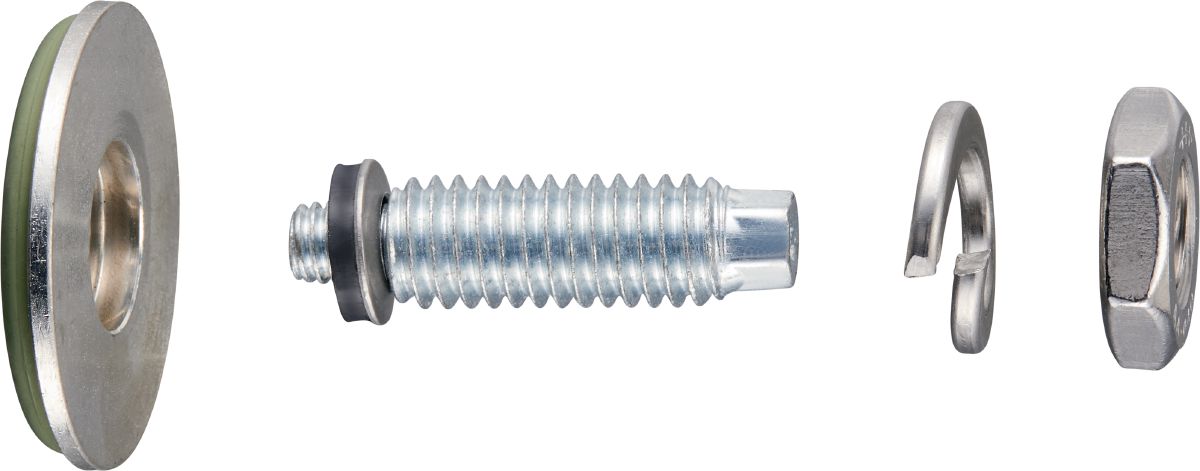
Think about what’s actually happening when you anchor something to concrete. The drill makes a hole. The impact driver sets the anchor. Then those tools go back in the truck, and the fastener stays there doing the real work, holding load, resisting pullout, keeping the structure safe.
A wedge anchor in a bridge support might hold tension for decades. A chemical anchor in a high-rise carries shear loads through earthquakes. A screw anchor in a parking garage deals with thermal expansion and vibration every single day. The tool was there for maybe two minutes. The fastener has to perform for the life of the structure.
That’s why Hilti’s fastener engineering matters. They’re not designing anchors to work with any tool, they’re designing complete systems where the fastener, the drill bit, and the installation method all work together to deliver the holding power the job actually needs.
Hilti’s System Approach
Here’s where Hilti’s approach gets interesting. Most companies sell you an anchor and assume you’ll figure out the rest. Hilti engineers the anchor, the drill bit that creates the hole, and the tool that sets it, all as one system.
The Kwik Bolt TZ2 wedge anchor isn’t just designed to hold load. It’s designed to work with specific bit diameters that create the exact hole size needed for proper expansion. The torque specs match what their impact wrenches deliver. The thread pitch works with their installation tooling. Everything is tested together, not separately.
Same with their screw anchors. The KH-EZ doesn’t need special close-tolerance bits like some competitors, it works with standard ANSI bits because Hilti engineered the anchor threads to accommodate normal drilling variation. That’s system thinking. They’re not just selling you a fastener and hoping it works. They’re giving you a complete solution where every piece is designed to work with every other piece.
Mechanical Anchors
Mechanical anchors work by expanding against the concrete or creating an undercut that locks them in place. No mixing, no cure time, no temperature restrictions. Drill the hole, set the anchor, load it immediately.
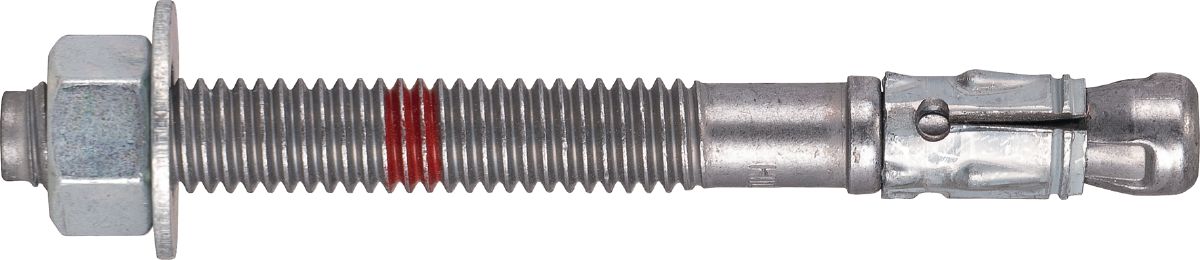
Hilti’s wedge anchors like the Kwik Bolt TZ2 use a tapered sleeve that expands when you torque the nut. They’re approved for cracked concrete and seismic applications, available in carbon steel or stainless 304/316 for different environments. When you need heavy-duty holding power with instant load capacity, wedge anchors deliver.
Screw anchors like the KH-EZ are even faster. No hammering, no torquing, just drill and drive. The coarse threads cut into the concrete as you install, creating immediate holding power. They’re approved for cracked concrete and seismic too, but install in a fraction of the time compared to wedge anchors. For overhead work or repetitive installations where speed matters, screw anchors are hard to beat.
Drop-in anchors like the HDI-TZ work in shallow embedment applications, perfect for post-tension slabs where you can’t drill deep. No overhead hammering required with Hilti’s automatic setting tool.
Kwik-X Dual Action: The Best of Both Worlds
The Kwik-X system combines KH-EZ screw anchors with KHC adhesive capsules. You get the installation speed of a mechanical anchor with the holding power of a chemical anchor.
Here’s how it works: drill the hole, drop in the adhesive capsule, drive the screw anchor through it. The anchor breaks the capsule and mixes the adhesive as it installs, bonding to both the concrete and the anchor itself. You get immediate mechanical holding from the threads, then full chemical bond strength as the adhesive cures.
It’s faster than traditional chemical anchors because there’s no separate mixing or injection step. It’s stronger than mechanical-only because you get both keying and bonding working together. Available in standard carbon steel, corrosion-resistant coating, or stainless 316 depending on the environment. When you need serious holding power but can’t wait around for traditional chemical anchors to cure, Kwik-X delivers both.
Material Matters
The strongest anchor in the world won’t last if it corrodes in six months. Material selection matters as much as holding power.
Standard zinc-plated carbon steel works fine for interior, dry conditions. Hot-dip galvanized gives you better corrosion resistance for outdoor applications away from salt exposure. Stainless 304 handles most outdoor environments including light coastal exposure. Stainless 316 is what you need for heavy marine environments, chemical plants, or anywhere corrosion is a serious concern.
Hilti offers their anchors across this full range. Kwik Bolt wedge anchors come in carbon steel, stainless 304, and stainless 316. KH-EZ screw anchors are available in standard carbon steel, mechanically galvanized (CRC coating), and stainless 316. You’re not locked into one material option, you pick the anchor that matches both your structural requirements and your environmental conditions.
The approvals follow the material too. ICC-ES reports, seismic ratings, and nuclear qualifications (NQA-1) are available across multiple material options, so you’re not sacrificing performance for corrosion resistance.
PROFIS Software: Design Before You Drill
PROFIS Engineering is Hilti’s cloud-based anchor design software. You plug in your loads, base material, and application, it calculates anchor layouts, verifies code compliance, and generates detailed reports with all the math shown.
It designs according to ACI 318, CSA, Eurocode, and Hilti’s own SOFA design method for configurations not covered by standard codes. The Smart Design feature automatically optimizes anchor layouts. You can import loads directly from structural analysis software like SAP2000, ETABS, or Revit, then export your final design back to BIM and CAD programs.
The free Standard version handles everyday anchoring projects. The Premium version adds advanced features like Component-Based Finite Element Method calculations for baseplates and the ability to import from multiple structural analysis programs.
Why does this matter? Because designing the anchor layout before you drill prevents mistakes that can’t be fixed later. Wrong spacing, inadequate edge distance, or undersized anchors aren’t problems you want to discover after the holes are already drilled. PROFIS lets you verify everything upfront, generate submittal documentation, and hand the inspector calculations that show the anchors will perform as required.
Testing and Approvals
ICC-ES reports, seismic approvals, fire ratings, it all sounds like bureaucracy until you’re standing in front of an inspector who won’t sign off without proper documentation.
These approvals aren’t just paperwork. They represent independent third-party testing that verifies the anchor will perform as claimed. ICC-ES reports document testing in cracked and uncracked concrete, with and without seismic loads. Seismic approvals mean the anchor has been tested to survive earthquake conditions. Fire ratings verify the anchor maintains holding power at elevated temperatures. Nuclear qualifications (NQA-1) represent some of the most rigorous testing available.
Hilti’s mechanical anchors carry ICC-ES reports for concrete and masonry, seismic approvals, and many include nuclear qualifications. Their chemical adhesives have approvals for underwater installation, water-filled holes, and extreme temperatures. When the inspector asks for documentation, you have it. When the engineer specifies certain approvals, Hilti’s anchors meet them.
It’s not about collecting certificates, it’s about having third-party verification that the anchor holding up your structure has been tested to do exactly that.
FAQ
The Real Difference: Engineering Over Marketing
Most companies sell fasteners. Hilti engineers fastening systems.
The difference shows up in how they approach the problem. A typical manufacturer designs a tool, then creates anchors that work with it. Hilti starts with the application, what loads need to be carried, what base material you’re working with, what environmental conditions the anchor will face, then engineers the fastener, the drill bit, and the installation method as one complete system.
It’s why their screw anchors work with standard bits instead of requiring special tooling. It’s why their wedge anchors have torque specs that match their impact wrenches. It’s why PROFIS software knows exactly which anchors work for which applications and can generate the documentation to prove it.
You’re not buying a box of anchors and figuring out the rest yourself. You’re getting a complete solution where the fastener, the bit, the tool, and the design software all work together. Because at the end of the day, the anchor is what’s holding your structure together. Everything else is just there to install it correctly.
