
A note on what this is: everything below comes from a U.S. patent that the USPTO granted on Oct. 20, 2026. A patent is not a product announcement. The company has not confirmed a product based on it, and there is no release date, price or brand name attached to it. Companies patent many ideas that never reach store shelves.
Two companies in the Stanley Black & Decker family were granted U.S. patents on Oct. 20, 2026. BLACK & DECKER INC. received one for a shear wrench with a built-in ejector for sheared bolt tips, and Stanley Black & Decker, Inc. received one for a bi-directional hand screwdriver. Neither patent names a brand that would sell the tool. For more on the company, see our Stanley Black and Decker and Black & Decker Tools pages.
A shear wrench that ejects the sheared tip: U.S. Patent No. 12,766,676
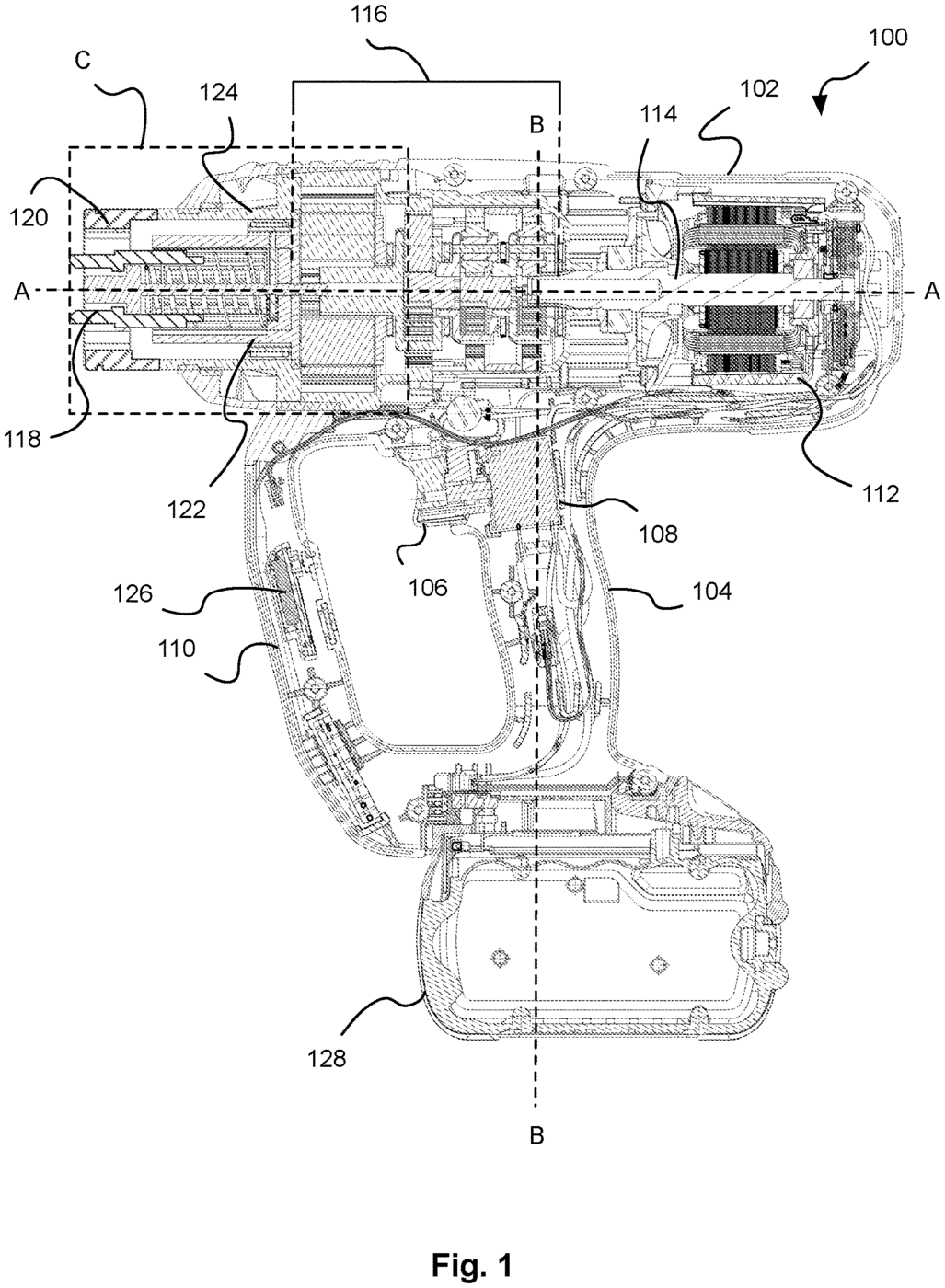
The patent is titled “Shear Wrench Tool.” It describes a motor, a transmission, a first socket that engages the tip of the bolt to be sheared, and a second socket that engages the nut threaded on the bolt. The two sockets are driven by the transmission and turn in opposite directions relative to each other when the motor runs.
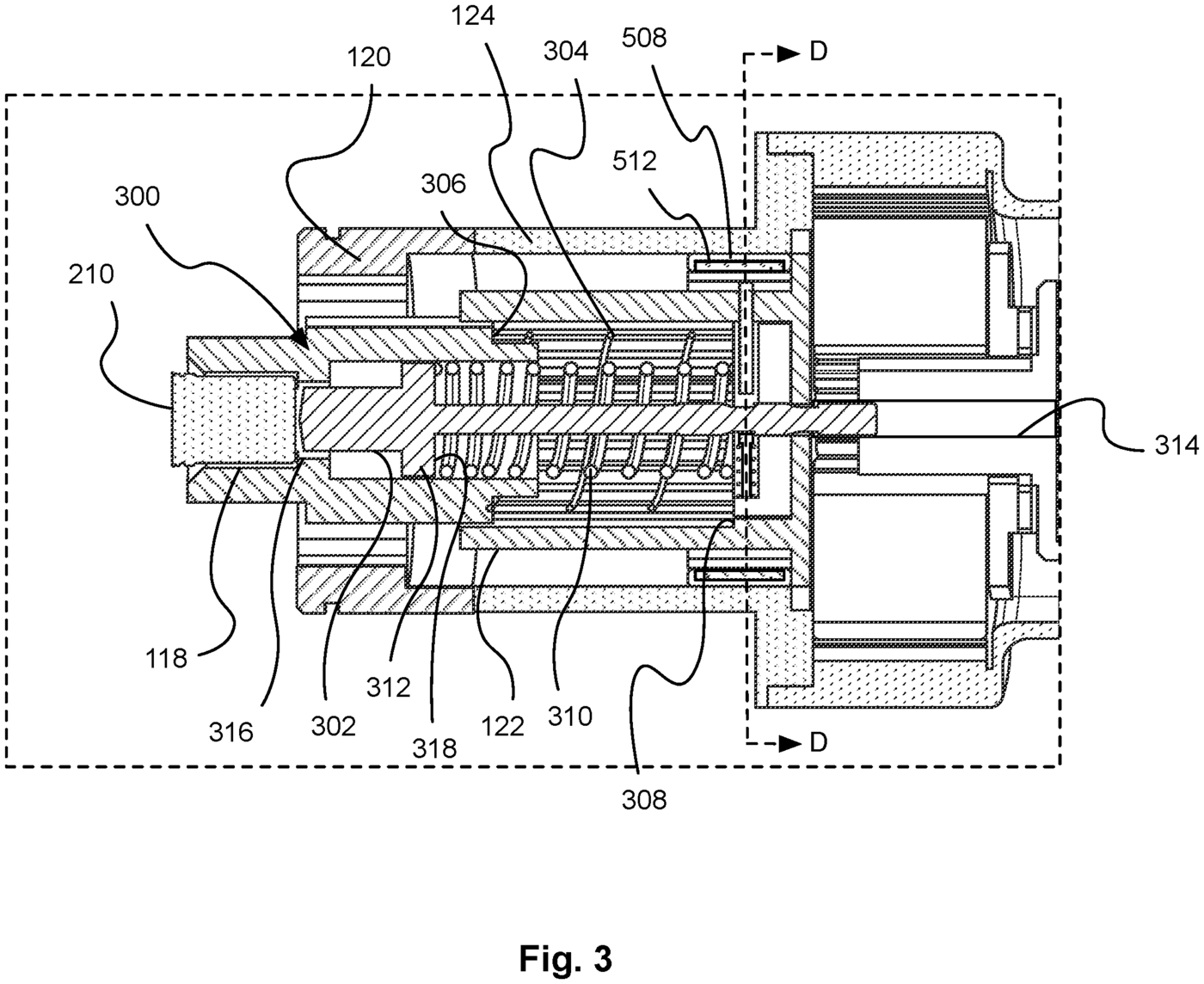
What the patent adds is an ejector mechanism: an ejector pin, coaxial with the two sockets, that moves between a retracted position (so the bolt tip can go into the first socket) and an extended position that pushes a sheared tip out of the first socket. Claim 1 says the pin is biased toward the extended position.
Claim 1 also ties the ejector to motor direction. When the motor turns in a first direction, the sockets tighten the bolt and nut and the ejector pin is blocked from extending. When the motor turns in the second direction, the ejector mechanism is actuated and the pin moves out to remove the sheared tip. Dependent claims describe a spring-biased retaining arm that blocks the pin and a rotatable release sleeve with engagement ribs.
- Patent: U.S. Patent No. 12,766,676 (B2), granted Oct. 20, 2026 (full USPTO PDF)
- Title on the patent: Shear Wrench Tool
- Assignee (as printed): BLACK & DECKER INC., New Britain, CT (US)
- Inventors: Rafael Gottschling, Michael Kunz, Philipp Libera and Benjamin Schmidt
- Filed: Apr. 11, 2023
- Claims: 15
Our opinion
What We Think They’re Making
We think this could become a cordless shear wrench for tension-control bolts, and it could fit a pro cordless line within the Stanley Black & Decker family, though the patent doesn’t name a brand. Steel erectors, ironworkers and bridge crews who install a lot of these bolts might appreciate not having to clear sheared tips out of the socket by hand.
This is our opinion, not a product announcement. The patent does not confirm a product, brand, price or release date.
A bi-directional screwdriver: U.S. Patent No. 12,766,675
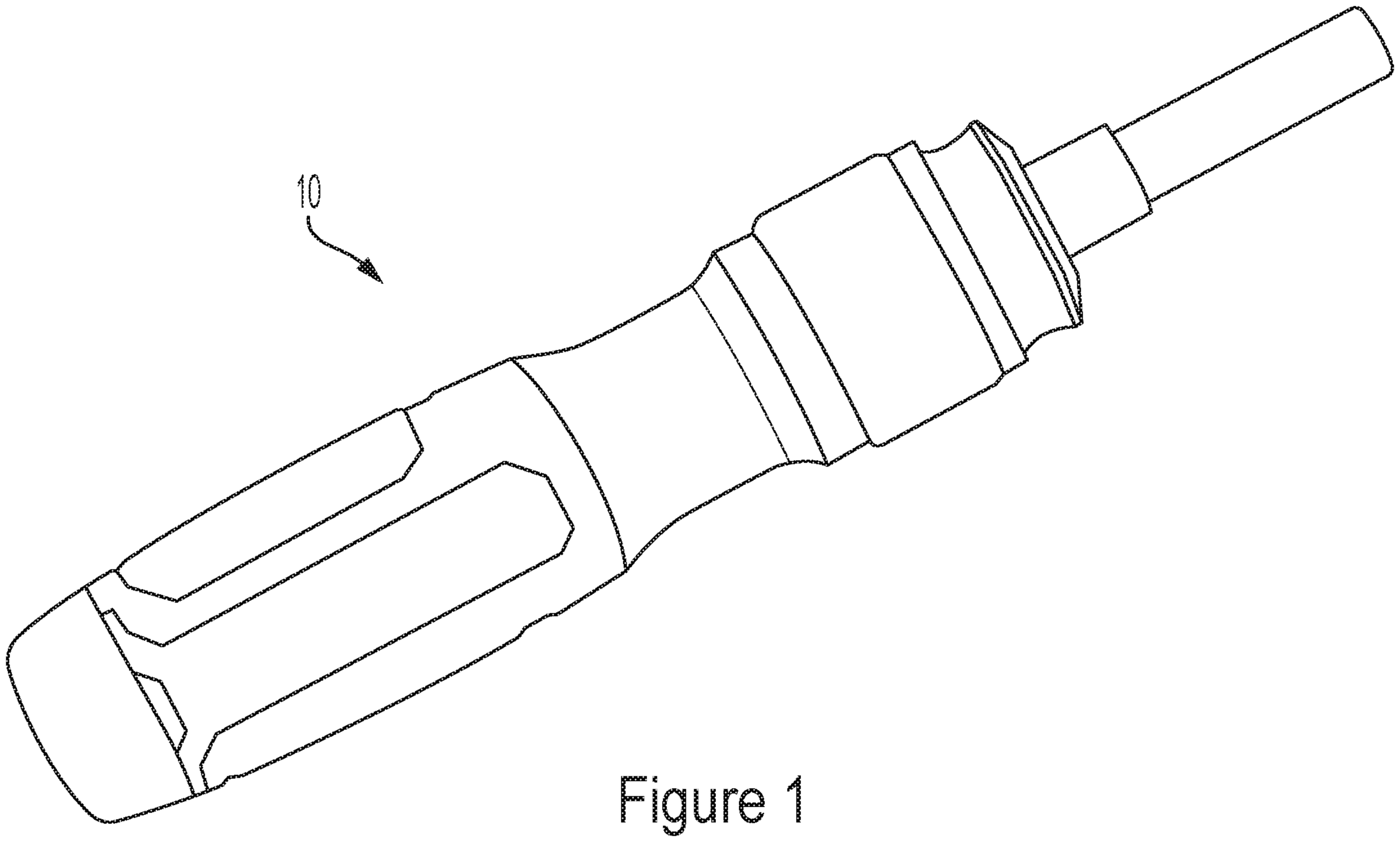
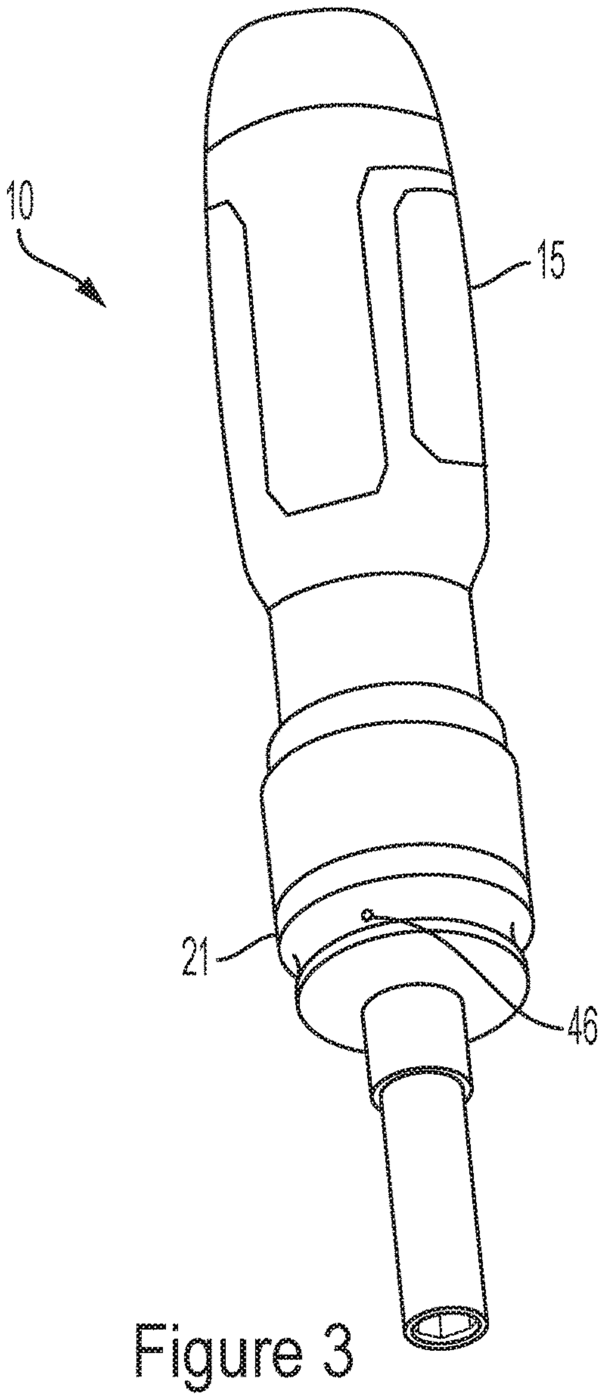
Titled “Bi-Directional Screwdriver,” this patent describes a hand screwdriver with a handle, a main housing and a gear assembly. According to the abstract, when the grip ring is held and the handle is turned, the driving gear turns the driven gear in the reverse direction through an idle gear.
Claim 1 describes a gear assembly with a driving gear, a driven gear, a transmission seat and two idle gears mounted on an idle gear axle between the driving and driven gears. It also describes a single reversing member inside the main housing, a set of pawls held in channels of the main housing, and a collar with axial two-way movement that is coupled to the reversing mechanism to give selective one-way rotation of the working end. The engagement between the reversing member and the pawls is a ramped engagement in the axial direction.
- Patent: U.S. Patent No. 12,766,675 (B2), granted Oct. 20, 2026 (full USPTO PDF)
- Title on the patent: Bi-Directional Screwdriver
- Assignee (as printed): Stanley Black & Decker, Inc., New Britain, CT (US)
- Inventors: Daniel Cheveralls and Christopher Laidlaw
- Filed: Apr. 1, 2020 (PCT filing date)
- Claims: 6
Our opinion
What We Think They’re Making
We think this could become a hand screwdriver that drives a screw whichever way you twist the handle, and it might fit one of the hand-tool lines in the Stanley Black & Decker family. The patent doesn’t name one. Electricians, maintenance techs, furniture assemblers and DIYers who drive a lot of screws by hand in tight spots could find it handy.
This is our opinion, not a product announcement. The patent does not confirm a product, brand, price or release date.
What it all means
Both are granted patents. They do not say whether, when or under which brand either tool might be sold. For other patents granted the same week, see the Milwaukee patents, the Bosch patents and our roundup of more patents from this week.
Related Reading on Tools In Action
FAQ
Are these new DEWALT or Stanley products?
No. These are U.S. patents granted on Oct. 20, 2026. The patents do not name a brand, and there is no confirmed product, price or release date.
Who owns the shear wrench patent?
U.S. Patent No. 12,766,676 is assigned to BLACK & DECKER INC., New Britain, CT.
What does the shear wrench patent add?
An ejector pin, coaxial with the two sockets, that is blocked while the tool tightens the bolt and moves out to push the sheared bolt tip from the socket when the motor turns in the other direction.
Who owns the bi-directional screwdriver patent?
U.S. Patent No. 12,766,675 is assigned to Stanley Black & Decker, Inc., New Britain, CT.
How does the bi-directional screwdriver work?
According to the patent, it uses a driving gear, a driven gear and idle gears so that turning the handle while holding the grip ring turns the driven gear in the reverse direction, with a reversing member, pawls and a collar to select the output direction.
What could these Stanley Black & Decker patents become?
In our opinion, they could become a cordless shear wrench for tension-control bolts and a hand screwdriver that drives in both twisting directions. Neither patent names a brand or product.