
A note on what this is: everything below comes from a U.S. patent that the USPTO granted on Oct. 20, 2026. A patent is not a product announcement. The company has not confirmed a product based on it, and there is no release date, price or brand name attached to it. Companies patent many ideas that never reach store shelves.
Milwaukee Electric Tool Corporation picked up four U.S. patents on Oct. 20, 2026, and they cover a lot of ground: a chain-and-guide-bar cutting tool that stands up on its own battery pack, a PEX expansion tool with two gear ratios, an antenna extender for tools, and a portable power supply that can charge and power things at the same time. Here is what each patent actually describes and claims. For more on the company, see our Milwaukee Power Tools page.
A cutting tool that stands on its battery: U.S. Patent No. 12,766,754
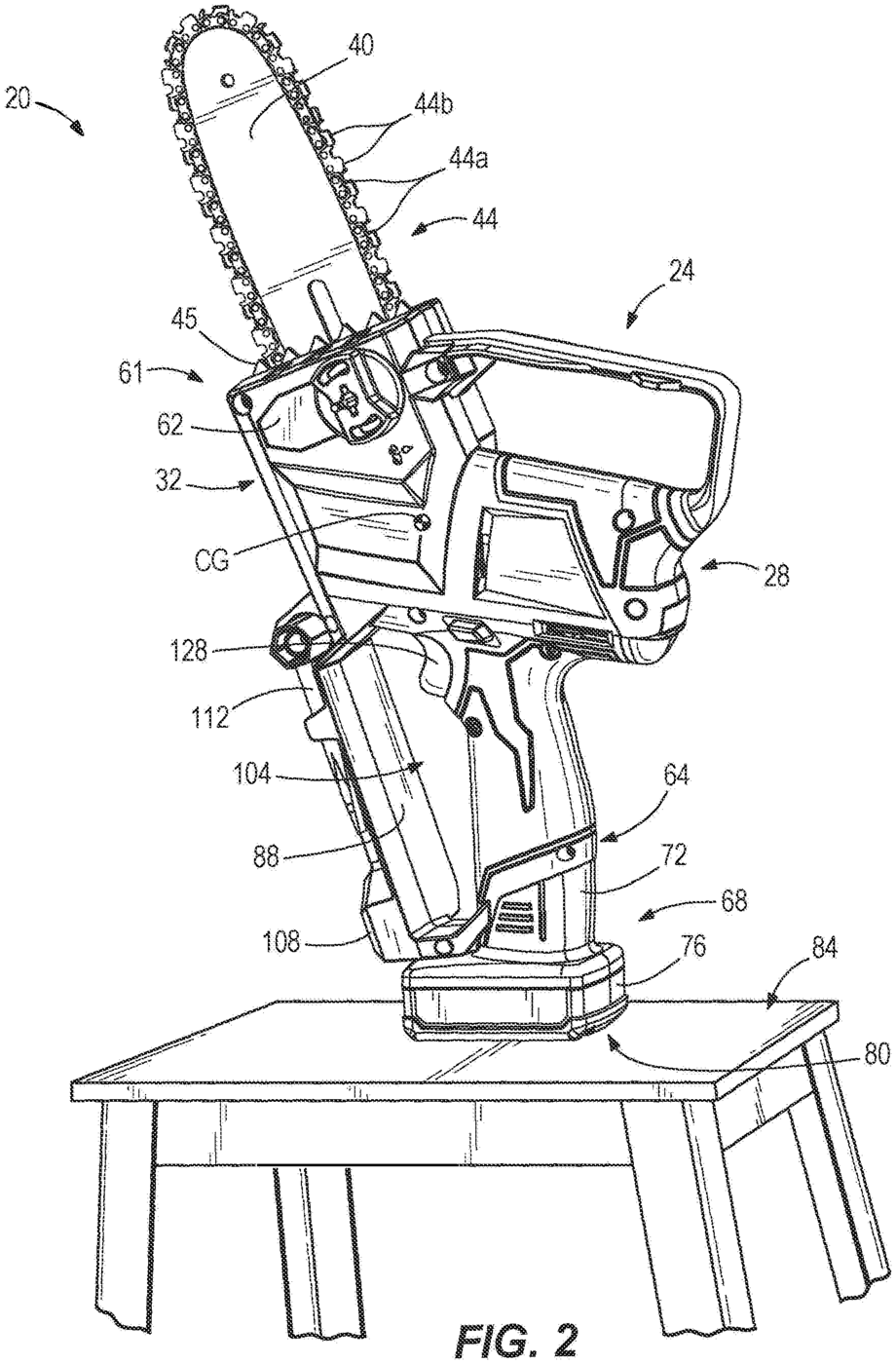
The patent is titled “Powered Handheld Cutting Tool.” It describes a tool with a motor, a driven gear and a sprocket, a housing, a guide bar that extends from the housing, and a chain that runs along the guide bar when the sprocket turns. In other words, it is laid out like a small chainsaw, although the patent itself uses the term “handheld cutting tool.”
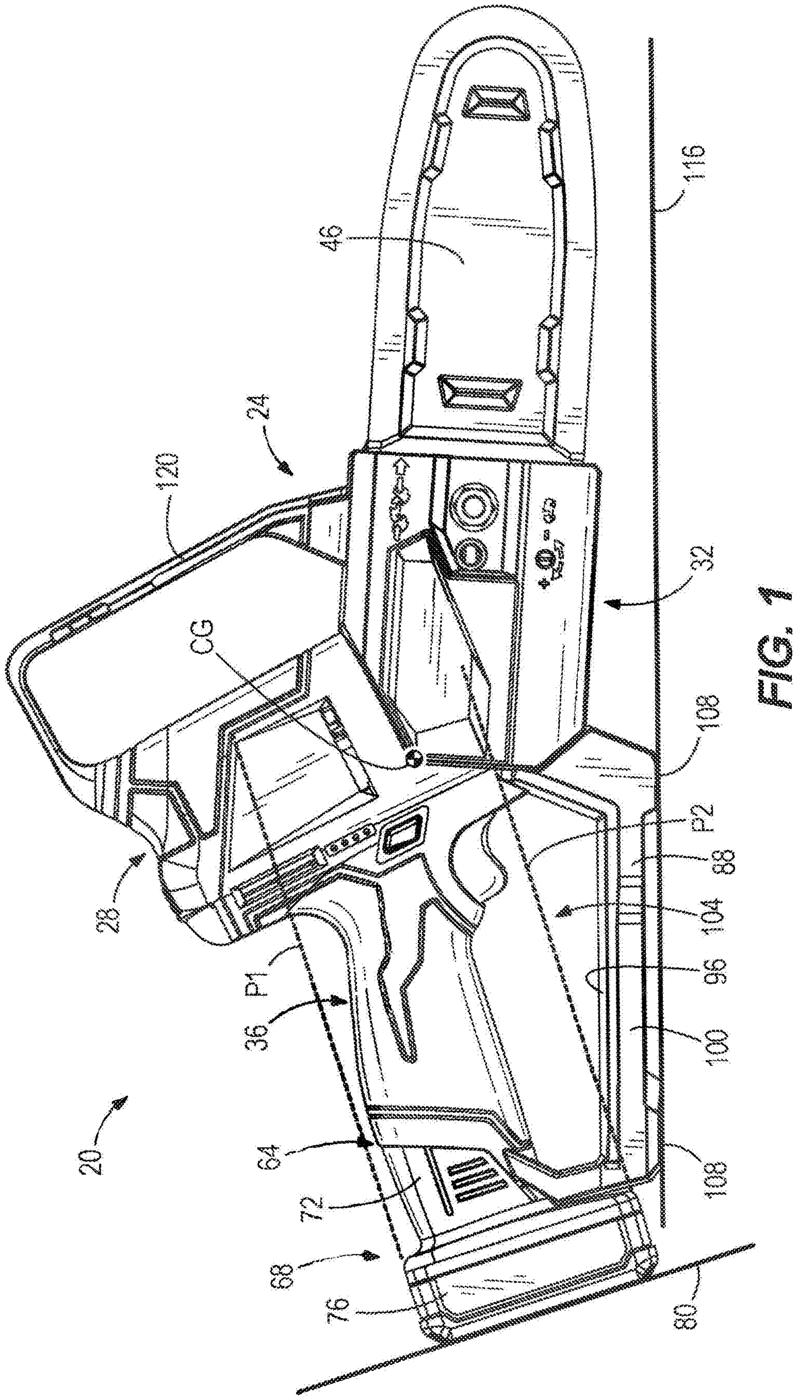
The interesting part is the battery. Claim 1 says the removable battery pack has a “foot portion” on which the tool is supported in an upright position. The tool also has one or more support faces, extending forward of the housing, on which it rests in a horizontal position. Those support faces define a plane that does not intersect the foot portion, so the tool has one resting position standing up and another lying down.
Claim 2 adds that the tool’s center of gravity sits directly above the foot portion when it is upright. Other claims describe a handle guard between the handle and the motor housing, and a drive housing set at an oblique angle to the motor housing.
- Patent: U.S. Patent No. 12,766,754 (B2), granted Oct. 20, 2026 (full USPTO PDF)
- Title on the patent: Powered Handheld Cutting Tool
- Assignee (as printed): Milwaukee Electric Tool Corporation, Brookfield, WI (US)
- Inventors: Shane McCue, Drake J. Schlosser, Charles M. Rowland and Anthony J. Buxton
- Filed: Jan. 10, 2025
- Claims: 20
Our opinion
What We Think They’re Making
We think this could become a compact cordless pruning-style saw. A tool that stands upright on its own battery pack could fit one of Milwaukee’s existing battery platforms, such as M12 or M18, though the patent doesn’t say which, if either. Arborists, tree crews, landscapers and homeowners who set a saw down often, on the ground, a tailgate or a ladder platform, might like a saw that stays upright instead of tipping onto its chain.
This is our opinion, not a product announcement. The patent does not confirm a product, brand, price or release date.
A PEX expansion tool with two gear ratios: U.S. Patent No. 12,766,585
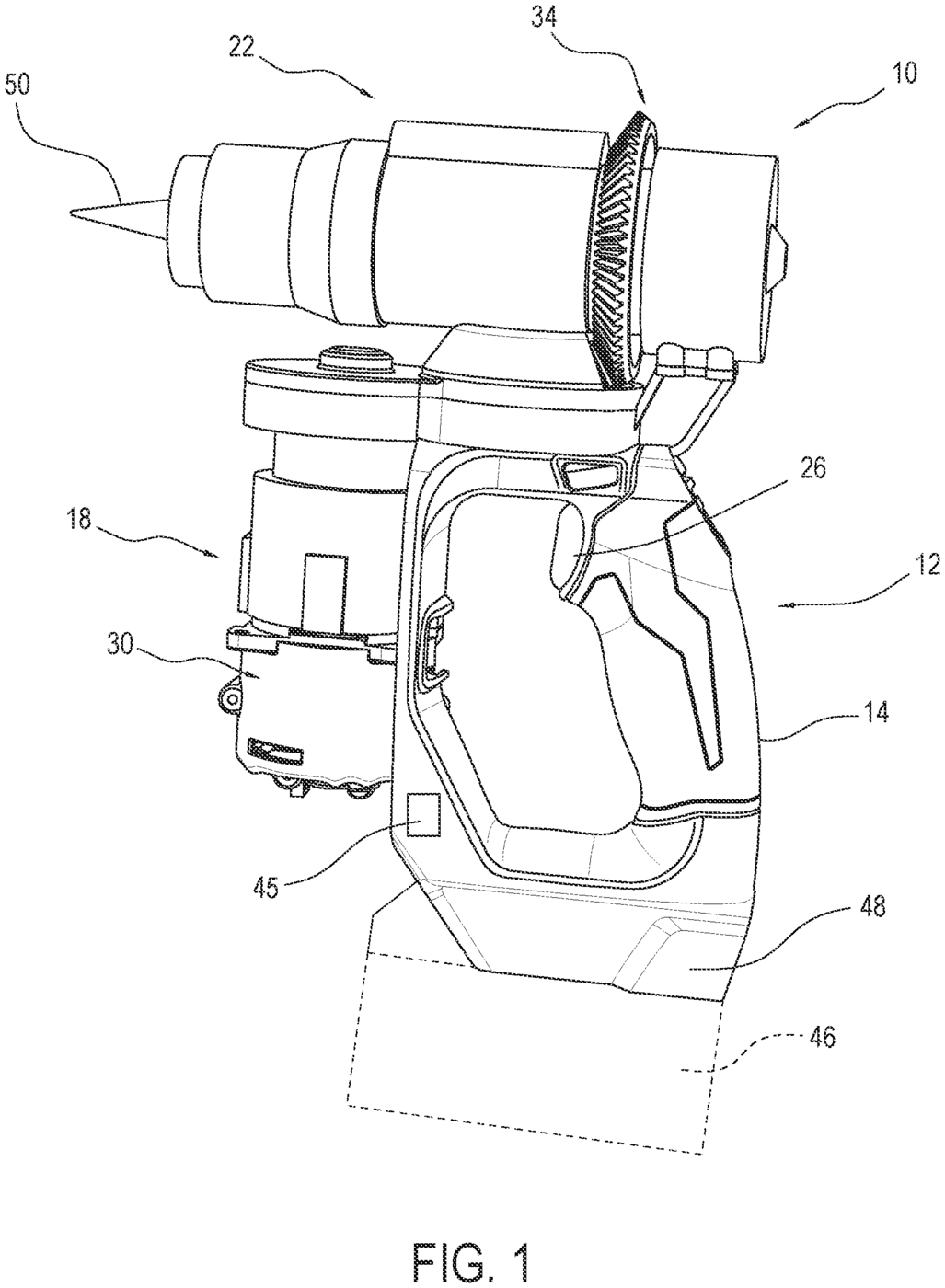
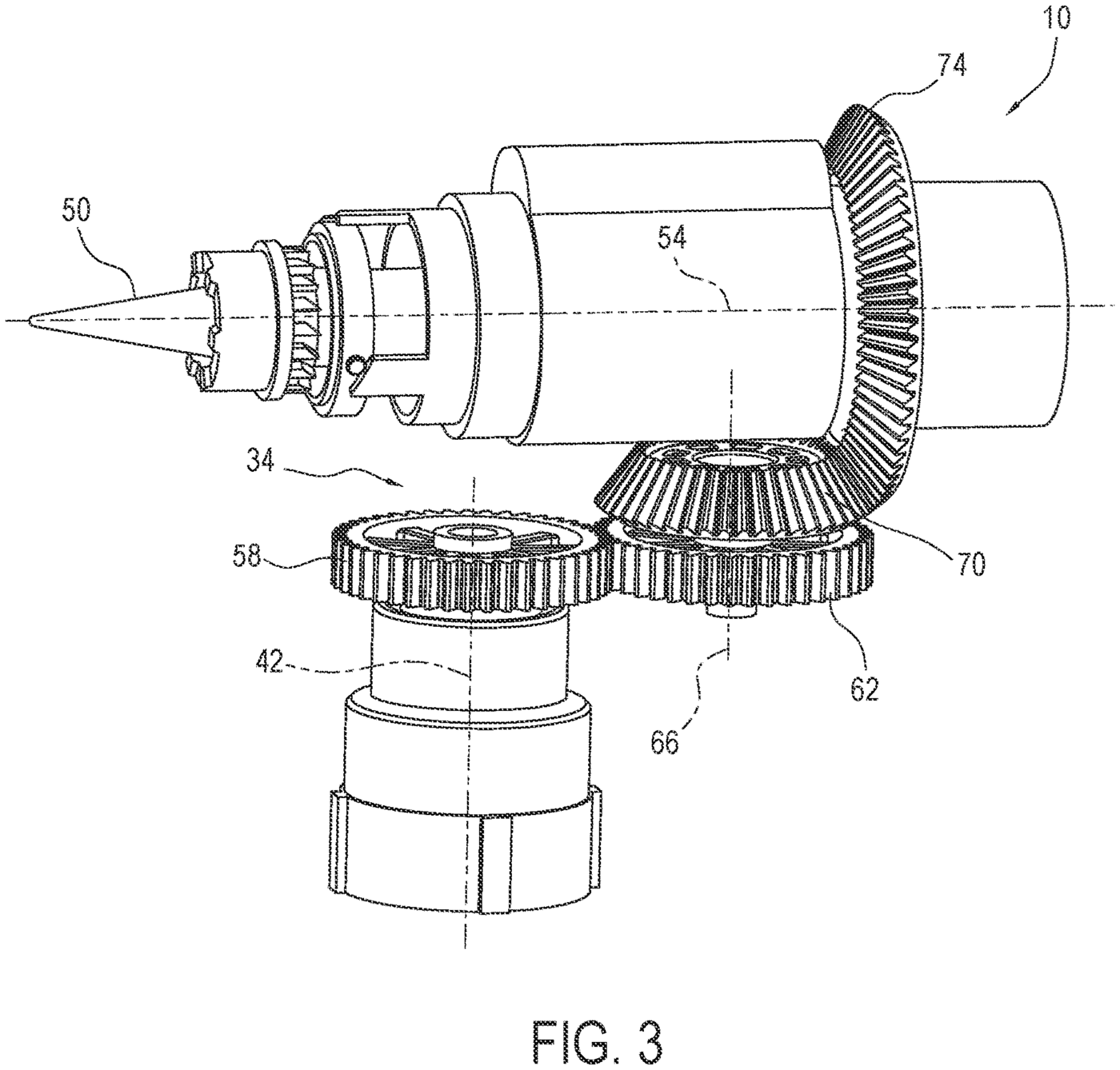
This one is titled simply “PEX Expansion Tool.” It describes a housing, a motor with a motor shaft, a mandrel, a transmission and a drive mechanism that turns the transmission’s rotation into back-and-forth (translational) movement of the mandrel.
Claim 1 is about the transmission. When the motor shaft turns in one direction, the transmission gives a first gear ratio. When the motor shaft turns in the opposite direction, it gives a second, different gear ratio. So one motor gets two different ratios depending on which way it spins.
The patent’s abstract and claim 2 also describe two operating modes. In the first mode, the mandrel reciprocates between a retracted position and a first extended position. In the second mode, it reciprocates between the retracted position and a second, different extended position.
- Patent: U.S. Patent No. 12,766,585 (B2), granted Oct. 20, 2026 (full USPTO PDF)
- Title on the patent: PEX Expansion Tool
- Assignee (as printed): MILWAUKEE ELECTRIC TOOL CORPORATION, Brookfield, WI (US)
- Inventors: James Wekwert, Jacob Lindsey, Peter J. Davies, Justin Miller, Andrew J. Smith, Troy C. Thorson, Ryan J. Denissen and John S. Scott
- Filed: Apr. 24, 2023
- Claims: 21
Our opinion
What We Think They’re Making
We think this could be aimed at a cordless PEX expansion tool, possibly on a platform like M12 or M18, though the patent doesn’t name one. Using one gear ratio when the motor runs one way and another ratio when it runs the other way might let the tool tune the expansion and return strokes differently. Plumbers, radiant heat installers and HVAC techs who make a lot of PEX connections are the obvious audience.
This is our opinion, not a product announcement. The patent does not confirm a product, brand, price or release date.
An antenna extender for tools: U.S. Patent No. 12,771,011
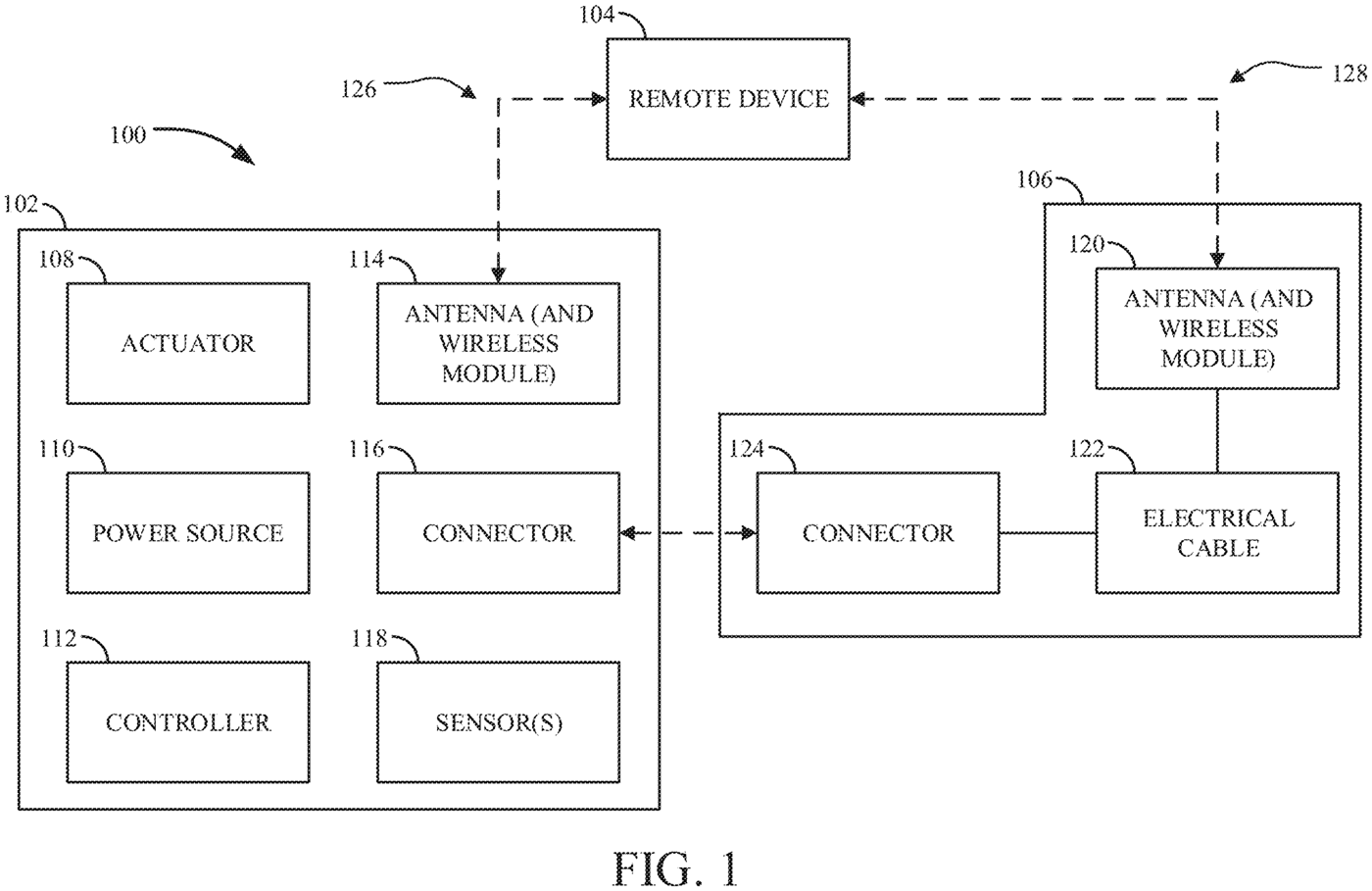
Titled “Systems and Methods for Tool Signal Extension,” this patent describes a tool with a body, a first antenna, a first connector and a controller that talks through that antenna. It pairs the tool with an extender: an electrical cable with a second antenna and a second connector.
According to claim 1, when the extender’s connector is plugged into the tool’s connector, the controller determines that the two are connected and then uses the second antenna (the one on the cable) for wireless communication. Other claims describe the tool using a sensor, or a signal sent through a wire in the extender’s connector, to detect that the extender is attached.
- Patent: U.S. Patent No. 12,771,011 (B2), granted Oct. 20, 2026 (full USPTO PDF)
- Title on the patent: Systems and Methods for Tool Signal Extension
- Assignee (as printed): Milwaukee Electric Tool Corporation, Brookfield, WI (US)
- Inventors: Anthony M. Davis, Matthew Halenka, Bo Chen and Kegan Markwardt
- Filed: Dec. 17, 2024
- Claims: 20
Our opinion
What We Think They’re Making
We think this could tie into Milwaukee’s connected-tool features, where tools talk wirelessly to phones or tracking systems. A plug-in cable with its own antenna might help when a tool sits somewhere its built-in antenna struggles to get a signal out. Tool managers, fleet and equipment crews, and contractors who track tools across many jobsites seem like the people who could use it most.
This is our opinion, not a product announcement. The patent does not confirm a product, brand, price or release date.
A portable power supply with pass-through charging: U.S. Patent No. 12,771,158
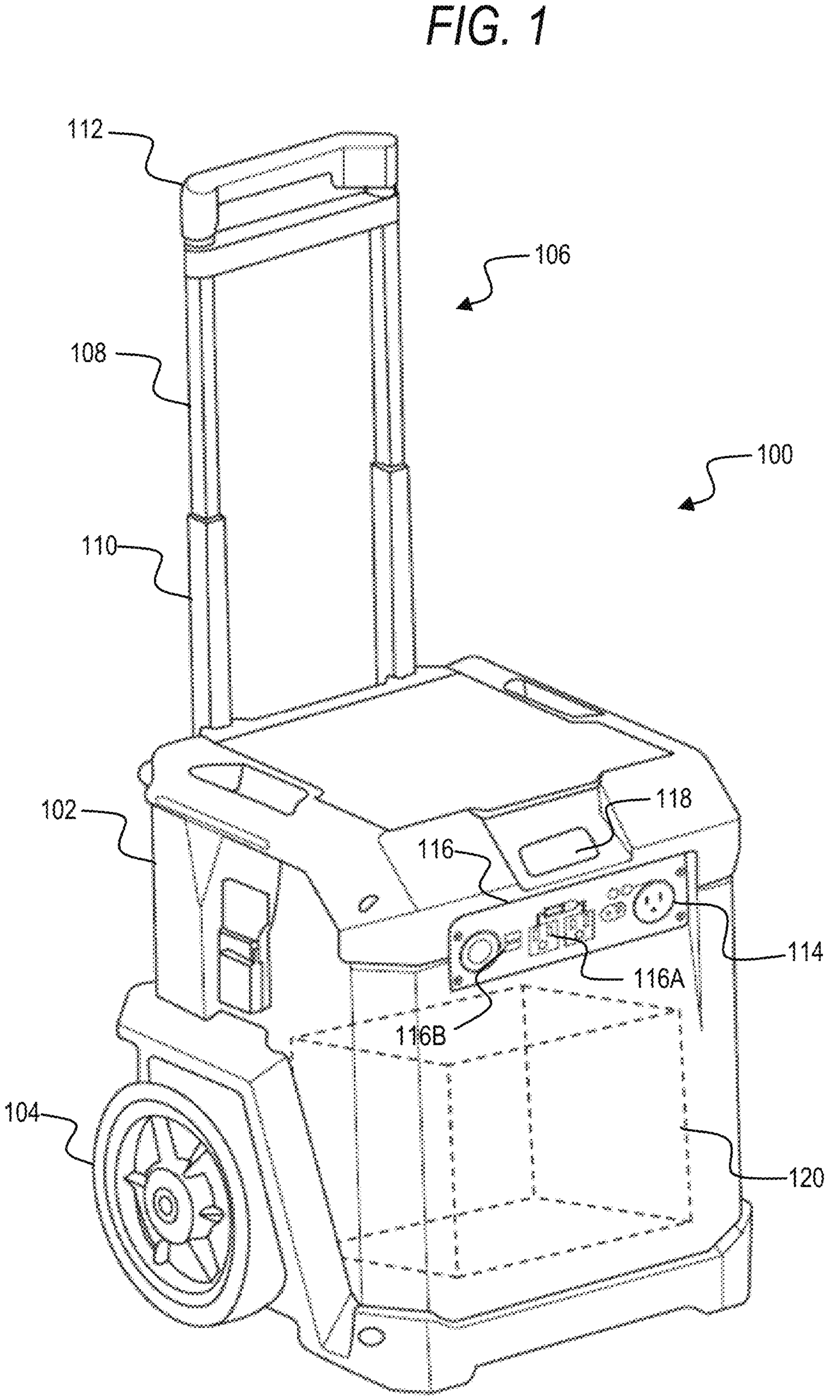
This patent is titled “Portable Power Supply With Bidirectional Charging and Passthrough.” It describes a portable power supply with an AC power input, an AC power output, a battery core, a charger connected to the AC input, an inverter feeding the AC output, and a controller.
Claim 1 says the controller works out how much power the inverter is using, based on voltage and/or current at the inverter’s DC input. When the charger is active and AC power is requested at the output, the controller has the charger send DC power to the inverter. At the same time, the battery core either puts out or takes in power depending on how much the inverter is using.
The dependent claims spell that out. If the inverter is using less power than the charger provides, the battery core takes in the difference. If the inverter needs more than the charger provides, the battery core supplies the difference.
- Patent: U.S. Patent No. 12,771,158 (B2), granted Oct. 20, 2026 (full USPTO PDF)
- Title on the patent: Portable Power Supply With Bidirectional Charging and Passthrough
- Assignee (as printed): Milwaukee Electric Tool Corporation, Brookfield, WI (US)
- Inventors: David Brochtrup and Logan Manderle
- Filed: Oct. 25, 2023
- Claims: 19
Our opinion
What We Think They’re Making
We think this could become a portable power station that can run tools or appliances while it charges from the wall, possibly alongside Milwaukee’s existing battery platforms, though the patent doesn’t say so. Contractors who run cords and chargers on jobsites, service techs, and homeowners looking for outage backup might like being able to keep things running while the unit charges.
This is our opinion, not a product announcement. The patent does not confirm a product, brand, price or release date.
What it all means
These are granted patents, which give Milwaukee Electric Tool Corporation legal protection for the claimed designs. They do not tell us whether, when or how any of these ideas will show up in a product. For other patents granted the same week, see the Stanley Black & Decker patents, the Bosch patents and our roundup of more patents from this week.
Related Reading on Tools In Action
FAQ
Are these Milwaukee products?
No. These are U.S. patents granted on Oct. 20, 2026 to Milwaukee Electric Tool Corporation. A patent is not a product announcement, and none of them comes with a confirmed product, price or release date.
What does U.S. Patent No. 12,766,754 cover?
A handheld cutting tool with a guide bar and chain whose removable battery pack has a foot portion the tool can stand on upright, plus support faces it can rest on horizontally.
How does the PEX expansion tool patent get two gear ratios?
According to claim 1 of U.S. Patent No. 12,766,585, the transmission gives one gear ratio when the motor shaft turns in one direction and a different gear ratio when it turns in the opposite direction.
What is the tool signal extension patent about?
U.S. Patent No. 12,771,011 describes a cable extender with its own antenna. When it is plugged into the tool’s connector, the tool’s controller detects it and uses the extender’s antenna for wireless communication.
What does pass-through mean in U.S. Patent No. 12,771,158?
The portable power supply can run its charger and its AC output at the same time. The charger feeds DC power to the inverter, and the battery either takes in or supplies the difference, depending on how much power the inverter is using.
What could these Milwaukee patents become?
In our opinion, they could become a compact battery saw that stands on its pack, a cordless PEX expansion tool, a cable antenna for connected tools and a portable power station that charges while in use. None of that is confirmed, and the patents don’t name products.