
Archived from the Tools In Action forum (Power Tool News). This thread is read-only.
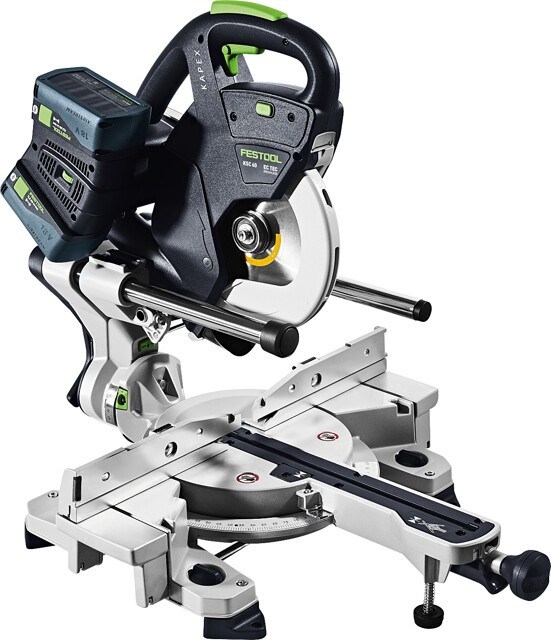
Cordless Kapex and some Cordless Vacs, but not cordless router and planer, yet!


I am digging that vacuum. Looks nice. Festool is always out of my price range but I would be interested in the vacuum.
Eric – TIA wrote:
3 hours ago, Eric – TIA said:I am digging that vacuum. Looks nice. Festool is always out of my price range but I would be interested in the vacuum.
It seems they are coming up with three different version of cordless vacs but interestingly all are 36V (2x18V), I am happy they have understood that 20V (18V) cordless vacs are almost useless and have not come up with a few models in that range like DeWALT and Makita. I also hope they are corded/cordless vacs.
I saw in Festool 2022 PDF catalogue that they will come up with an 8.0Ah battery at the end of 2022. All these new cordless tools are explained with details in new catalogue.
Altan wrote:
On 1/19/2022 at 1:40 AM, Altan said:I saw in Festool 2022 PDF catalogue that they will come up with an 8.0Ah battery at the end of 2022. All these new cordless tools are explained with details in new catalogue.
hmm an 8.0. Maybe they finally have a 10 cell battery with 21700 cells coming
Jronman wrote:
15 hours ago, Jronman said:hmm an 8.0. Maybe they finally have a 10 cell battery with 21700 cells coming
I am not well informed about batteries like you, as it is not my profession, I just wanted to share it so anyone here wants to plan for buying new Festool tools/batteries in 2022 can have it in their mind just in case if they would prefer 8.0ah batteries more, can wait a few more months.
@AltanI’m no expert in battery technology but after getting into tools back in 2016 I have learned quite a bit about them. 21700 is the sizing of each cell in the battery: 21 mm in diameter and 70mm in length. typically the higher the number the more potential for longer runtimes and higher power output. The old cell standard was 18650 or 18 mm in diameter by 65 mm in length. In the last few years companies started switching to 21700 for more power and longer runtimes. Many brands nowadays use an ammount of cells divisible by 5. One cell is equivalent to 3.6 volts. 5 cells times 3.6 equals the advertised 18 volts that many tools use. Slim packs use 5 cells while many larger packs use 10 cells. Some brands even have 15 cell packs now.
Jronman wrote:
3 minutes ago, Jronman said:@AltanI’m no expert in battery technology but after getting into tools back in 2016 I have learned quite a bit about them. 21700 is the sizing of each cell in the battery: 21 mm in diameter and 70mm in length. typically the higher the number the more potential for longer runtimes and higher power output. The old cell standard was 18650 or 18 mm in diameter by 65 mm in length. In the last few years companies started switching to 21700 for more power and longer runtimes. Many brands nowadays use an ammount of cells divisible by 5. One cell is equivalent to 3.6 volts. 5 cells times 3.6 equals the advertised 18 volts that many tools use. Slim packs use 5 cells while many larger packs use 10 cells. Some brands even have 15 cell packs now.
I have a feeling that Festool’s 8.0 Ah batteries will be the same size as their 6.0 Ah batteries. We will see. Also They will come up with a dual port charger at the same time.
Jronman wrote:
9 minutes ago, Jronman said:@AltanI’m no expert in battery technology but after getting into tools back in 2016 I have learned quite a bit about them. 21700 is the sizing of each cell in the battery: 21 mm in diameter and 70mm in length. typically the higher the number the more potential for longer runtimes and higher power output. The old cell standard was 18650 or 18 mm in diameter by 65 mm in length. In the last few years companies started switching to 21700 for more power and longer runtimes. Many brands nowadays use an ammount of cells divisible by 5. One cell is equivalent to 3.6 volts. 5 cells times 3.6 equals the advertised 18 volts that many tools use. Slim packs use 5 cells while many larger packs use 10 cells. Some brands even have 15 cell packs now.
Slightly off-topic, but battery technology has increased exponentially in the past 10 years. I picked up my first Li-Ion tools in early 2012; previously I’d only owned cordless Ni-Cad drills. The Porter Cable 18v kit came with an impact and drill, two batteries, and a multi-chemistry charger. The batteries were 1.3Ah, and a Ni-Cad battery was still available as that system originated as Ni-Cad only (like Ryobi One+) along with a 2.6Ah Li-Ion battery…I believe that the PC 18v system’s last gasp was returning to being Ni-Cad only, as the Li-Ion batteries and kits disappeared around 2016. A lot of platforms were replaced or rebranded in the early 2010s (e.g. PC 18v replaced by 20v Max or Kobalt 18v rebranded as 20v despite being completely compatible). When I reminisce of this stuff, I often use ToolGuyd as a reference/time capsule to see exactly how limited the technology was back then and how quickly today’s platforms evolved.
Now most brands offer a minimum of 2Ah batteries (though the last I checked some entry-level kits come with 1.3Ah or 1.5Ah packs), with capacities up to 15Ah and with high output batteries that provide more power to some tools. Whereas 10-15 years ago a lot of us relied on a basic Ni-Cad or Li-Ion battery and considered it “the” battery for our particular brand, we now have myriad choices in most brands. The Ryobi batteries I regularly rotate for my Score speaker, for example, range from 1.5Ah to 3.0Ah HP to standard 4.0Ah to 6.0Ah HP, with a few others tossed into the mix on occasion. For most of us a battery is a battery, but those who need to optimize their power sources can select from a large array of different packs for their preferred brand.
I don’t like the batteries larger than DeWALT’s 5.0 Ah batteries in general, Makita could keep the size of their 6.0Ah batteries same as their 5.0Ah batteries.
Altan wrote:
5 hours ago, Altan said:I don’t like the batteries larger than DeWALT’s 5.0 Ah batteries in general, Makita could keep the size of their 6.0Ah batteries same as their 5.0Ah batteries.
Tool design is probably almost as important as function for some consumers and, to me at least, my smaller DeWalt and M18 tools look odd with something like a 6.0Ah XR or a 9.0Ah High Demand battery. I think the 2.0/5.0Ah formats are nearly perfect for most projects, especially considering that they’re usually the same size as earlier 1.3/1.5Ah and 3.0Ah packs. Newer batteries are just plain bulky, to the extent that some existing tools are incompatible or must be modified to use them.