

Table of Contents
- The Complaint Is Getting Louder
- What "Quality Control" Actually Means in Manufacturing
- How Global Supply Chains Changed the Game
- The Cost-Cutting Trap: When Saving Money Breaks Tools
- Are the Big Brands Actually Getting Worse?
- What Happens When a Bad Batch Hits the Market
- How to Spot a Quality Problem Before You Buy
- FAQ
- Wrap-Up: Is This a Crisis or Just Growing Pains?
The Complaint Is Getting Louder
If you spend any time on tool forums, subreddits, or even the comment section of a product listing, you've probably noticed a pattern. Contractors and tradesmen who have been loyal to the same brand for 20+ years are starting to question whether that brand still deserves it. The complaints aren't subtle either. Stripped chucks out of the box. Plastic where metal used to be. Motors that give out before the warranty does. Batteries that barely survive a full season.
Here's what makes it hard to brush off. Lifestory Research runs an annual "America's Most Trusted" study that tracks consumer confidence across major brands. In the power tool category, brand trust scores have been shifting and not always upward, even for brands that spent decades building bulletproof reputations. That kind of movement doesn't happen when everything is fine.
The fair question is whether tools are actually getting worse, or whether we're just louder about it now. Social media and online reviews have given everyone a megaphone, and a single bad batch can generate thousands of complaints overnight in a way that wasn't possible 15 years ago. But here's the thing: the supply chain history, the manufacturing decisions being made right now, and the cost pressures tool companies are facing all suggest this isn't just perception. Something is changing, and it's worth understanding why.
What "Quality Control" Actually Means in Manufacturing
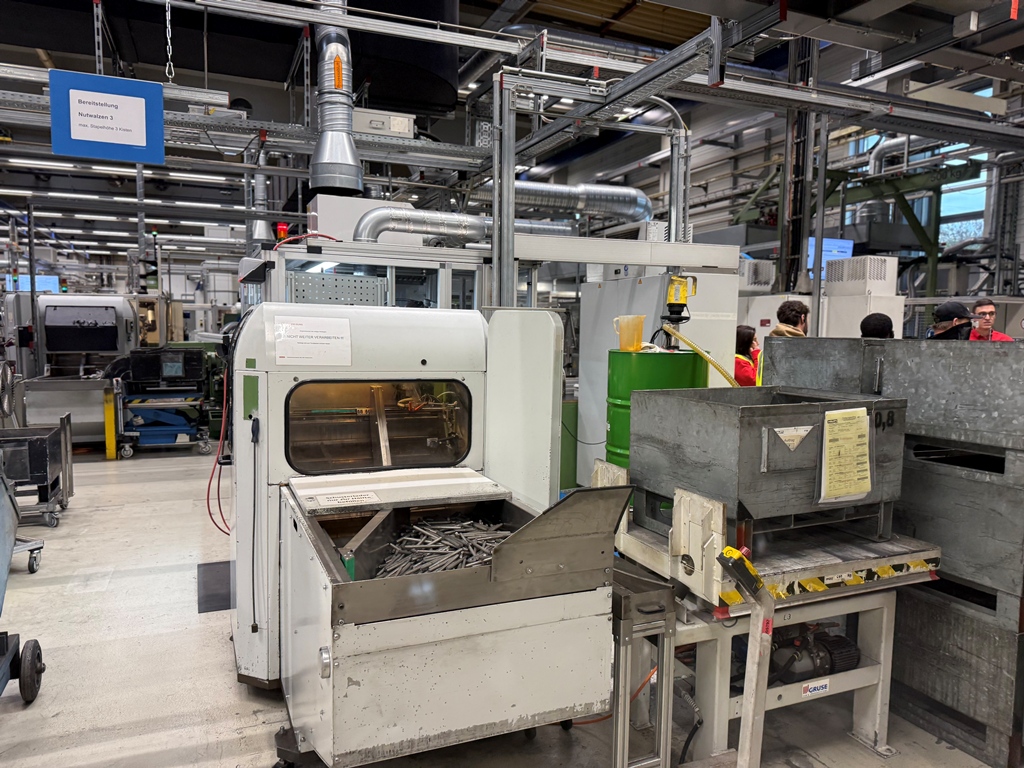
Quality control sounds like a straightforward concept, you make a thing, you check if it works, you ship it. But in reality, modern manufacturing QC is a layered system with a lot of places where things can quietly go wrong.
For tool brands, quality control happens at multiple stages. Raw materials get inspected before they ever touch a production line. Components are tested during assembly. Finished products go through performance checks before they're boxed. And in theory, random samples from each production run get pulled and stress-tested before a batch ships. That's the system working as designed.
The problem is that system costs money. And when brands are under pressure to hit price points, speed up production, or cut costs to protect margins, QC is one of the first places that gets quietly trimmed. Not eliminated, that would be too obvious, but thinned out. Fewer random pulls per batch. Faster cycle times on stress tests. Looser tolerances on components that aren't considered "critical." Each individual cut seems minor. Stack them together across a production run of a million units, and you start to see it show up in the field.
There's also a difference between factory QC and real-world performance that doesn't get talked about enough. A tool can pass every checkpoint on the production floor and still fail a contractor in six months because the tests don't fully replicate how hard these tools actually get used. A drill that passes a lab endurance test at controlled intervals is a very different animal than one getting hammered eight hours a day on a concrete jobsite in July.
And then there's the race to market. When a brand wants to be first to launch a new platform or tool category, the pressure to ship fast is real. Corners get cut with the quiet understanding that whatever isn't quite right will get fixed in the next generation. The contractor who bought version one essentially becomes a beta tester, paying full price to find the problems the QC process didn't catch.
How Global Supply Chains Changed the Game
There was a time when a tool brand controlled most of its own destiny. They owned or closely managed their factories, sourced materials regionally, and had direct oversight of how their products were built. That world is largely gone.
Starting in the 1990s and accelerating through the 2000s, tool manufacturers followed the same path as almost every other industry, they moved production overseas to chase lower labor costs. China became the dominant manufacturing hub, and brands that didn't make the move found themselves getting undercut on price by competitors who did. It wasn't a choice so much as a survival calculation.
What that shift created was a supply chain with a lot more links in it. Instead of one factory with direct oversight, you now have a brand in Milwaukee or Nashville working with contract manufacturers in Shenzhen, who are sourcing components from sub-suppliers spread across multiple provinces, who are buying raw materials from wherever the price is lowest that quarter. Every link in that chain introduces a variable. And variables are where quality problems hide.
The COVID-19 pandemic ripped the curtain back on just how fragile this system was. Factories shut down, shipping containers piled up at ports, and lead times that used to run six to eight weeks stretched to six to eight months. Brands that were already running lean inventory were suddenly scrambling to fill shelves. Some made decisions under that pressure, approving alternate suppliers, loosening incoming inspection standards, accepting components that wouldn't have passed muster in a normal environment, that showed up as field failures 12 to 18 months later.
The supply chain didn't just get longer over the past 30 years. It got harder to see through. And when you can't see it clearly, quality problems don't get caught, they get shipped.
The Cost-Cutting Trap: When Saving Money Breaks Tools
Every publicly traded tool company answers to shareholders. And shareholders want margins to go up, costs to go down, and growth to continue, ideally all three at the same time. That's a pressure that never goes away, and it shapes decisions at every level of the organization, including decisions that end up directly affecting the tool in your hand. So yes, there is something to be said for the family owned businesses and quality control.
The cost-cutting playbook in manufacturing is well documented. You start with the easy wins, renegotiating supplier contracts, optimizing shipping routes, reducing warehouse overhead. Those are smart moves that don't affect the product. But when that well runs dry and the pressure to cut more continues, the next round of reductions starts creeping toward the product itself.
It usually starts with materials substitution. A steel gear gets swapped for a hardened polymer version that's cheaper to produce and lighter to ship. A metal housing component gets replaced with a reinforced plastic that technically meets the spec but doesn't have the same long-term durability. Individually, these changes are defensible. Engineers will tell you the new part meets or exceeds the original performance standard under controlled conditions. What they won't always tell you is how it performs after two years of heavy use in the real world.
Stanley Black & Decker is probably the most talked-about example of this in recent years. After a major acquisition spree that brought DeWALT, Craftsman, and other brands under one roof, the company faced serious pressure to consolidate manufacturing and cut costs across its portfolio. The result, according to a wave of contractor complaints starting around 2021 and 2022, was a noticeable dip in quality on certain product lines, particularly Craftsman, which had already been through brand ownership changes before landing at SBD. The complaints weren't universal, but they were loud enough and consistent enough to get attention in the trade press and on jobsite forums.
The trap is that cost-cutting feels like smart business until it isn't. By the time the field failures show up and the warranty claims pile up and the forum threads go viral, the brand damage is already done. And rebuilding a reputation for quality takes a lot longer than losing it.
Are the Big Brands Actually Getting Worse?
This is the question everyone wants a straight answer to, and the honest answer is: it depends on the brand, the product line, and when you bought it.
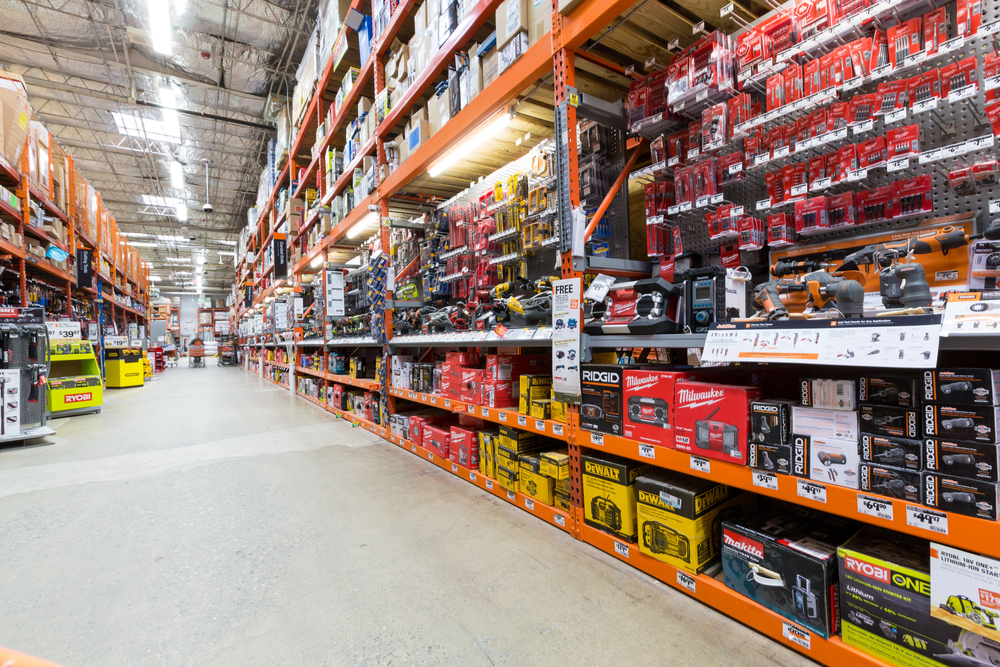
Let's start with what the data actually shows. J.D. Power conducts annual customer satisfaction studies across a wide range of product categories. While they don't publish a dedicated power tool study, their broader home improvement and hardware research consistently shows that professional-grade tool users report higher dissatisfaction when brands blur the line between their pro and consumer lines, which is exactly what's been happening as major brands chase the big box retail volume.
The clearest pattern that emerges when you dig into contractor forums, warranty claim trends, and product review data is this: the flagship professional lines from the major brands have largely held up. Milwaukee's M18 FUEL lineup, DeWALT's FlexVolt platform, Makita's XGT series, these are still getting strong marks from the trades. Where the complaints concentrate is in the mid-tier and entry-level lines, where the cost pressure is heaviest and the margin for error is thinnest.
Makita is an interesting case study. The brand built its reputation over decades on tight tolerances and consistent manufacturing out of its Japanese facilities. As production scaled and shifted to accommodate global demand, some of that consistency got harder to maintain. Long-time Makita users will tell you the tools still perform, but the fit and finish, the small details that used to feel overbuilt, aren't quite what they were 15 years ago.
RYOBI tells a different story. Here's a brand that was never positioned as a pro tool, never pretended to be, and has actually improved in quality and value over the past decade while keeping prices low. Sometimes the brands that aren't trying to be everything to everyone end up doing their one thing very well.
Then there's Hilti, which sits in its own category entirely. Hilti consistently ranks at the top when it comes to quality, durability, and owner satisfaction, and it's not particularly close. The brand operates on a direct sales model, meaning you're not buying Hilti off a shelf at Home Depot. You're working with a Hilti rep, and that relationship comes with service, support, and accountability baked in. Hilti owners are some of the most loyal in the trades, and for good reason. The tools are built to a standard that most brands simply don't match, and the company's commitment to that standard hasn't wavered the way it has at brands juggling a dozen product tiers and a shareholder call every quarter.
The honest takeaway is that "Are tools getting worse?" is the wrong question. The better question is which tier of which brand's lineup you're buying, because within the same brand, the answer can be completely different depending on which shelf you pulled it from.
What Happens When a Bad Batch Hits the Market
Even the best-run manufacturing operations have bad days. A supplier ships a batch of substandard components that slips through incoming inspection. A production line runs too fast during a shift change and tolerances drift. A new contract factory hasn't fully dialed in the process yet. It happens. The real question isn't whether bad batches occur, it's what happens after they do.
In the best case scenario, the brand catches it internally through warranty claim patterns or field reports, issues a quiet recall or replacement program, and handles it before it becomes a public story. Milwaukee and DeWALT have both done this effectively over the years, identifying a problem batch, reaching out to affected customers, and making it right without a lot of drama. That's quality control working the way it's supposed to, just later in the process than anyone would like.
The worst case is when a brand either doesn't catch the pattern fast enough, which happens more than people realize, the company catches it and decides the warranty cost is cheaper than a recall. In those situations, individual contractors start experiencing failures, posting about it online, and the complaint thread starts building. By the time it hits the major tool forums and YouTube channels are doing teardown videos showing exactly what failed and why, the brand is already playing defense.
The speed at which bad batch stories travel today is something tool brands weren't built to handle. A failure that would have generated a few dozen warranty claims and some word-of-mouth complaints in 2005 can now produce thousands of one-star reviews, a Reddit thread with half a million views, and a YouTube video tearing the tool apart that ranks on the first page of Google within a week. The reputational damage moves faster than the supply chain fix.
What's worth watching is how brands respond when it happens. A fast, transparent response that prioritizes the customer almost always comes out the other side with brand loyalty intact, sometimes stronger than before. A slow, defensive response that makes contractors fight for a warranty claim they're clearly owed? That's how you lose a customer for life, and everyone they talk to on the jobsite.
How to Spot a Quality Problem Before You Buy
The good news is that between the internet, the trades community, and the sheer volume of tool content out there, you have more information available before a purchase than any generation of contractors before you. The trick is knowing where to look and what signals actually matter.
The first place most people go is Amazon reviews, and while those are useful, they require some filtering. Look past the overall star rating and go straight to the three-star reviews. One-star reviews often come from people who had a bad day, and five-star reviews are sometimes incentivized. The three-star reviewers tend to be the most honest, they liked the tool enough to not hate it, but they'll tell you exactly what disappointed them. Pay attention to whether the same complaint shows up repeatedly across different reviewers. One person's bad experience is an outlier. Ten people reporting the same stripped gear or overheating motor is a pattern.
Tool forums and subreddits are where the real intelligence lives. Communities like r/Tools, r/DIY, and the various trade-specific forums have contractors who have put serious hours on specific models and aren't shy about sharing what held up and what didn't. Search the model number before you buy. If there's a known issue, someone has already documented it in detail.
YouTube teardowns have become one of the most valuable resources in the tool space. Channels that disassemble tools and show you exactly what's inside, the quality of the gears, the thickness of the housing, the grade of the motor components, give you a level of transparency that no marketing brochure ever will. If a tool has been out for more than six months and nobody has done a teardown, that in itself tells you something about how much attention it's getting from the serious tool community.
Finally, pay attention to warranty terms and how a brand handles claims. A brand that offers a strong warranty and makes it easy to file a claim is telling you something about how confident they are in what they're shipping. A brand that buries the warranty process in paperwork and fine print is telling you something too.
FAQ
Both things are true at the same time. Social media has amplified complaints in a way that makes problems feel bigger than they used to, but the manufacturing pressures, supply chain changes, and cost-cutting decisions happening inside major brands are real. It's not just perception, there's something to it, especially in the mid-tier product lines.
Hilti and Bosch consistently sit at the top of this conversation. Hilti is in a class of its own for professional-grade durability, the tools are built to a standard most brands don't match, and owner satisfaction is about as high as it gets in the trades. Bosch has maintained a strong reputation for precision engineering and consistent quality across its lineup, particularly in its professional blue line. If long-term durability is your priority, both brands are worth the investment.
Generally yes. The flagship professional lines from Milwaukee, DeWALT, and Makita have largely held up even as complaints have grown around their mid-tier and consumer offerings. The key is knowing which line you're buying from within a brand's catalog - pro and consumer tools from the same brand can be very different products.
Wrap-Up: Is This a Crisis or Just Growing Pains?
The tool industry isn't falling apart. The best brands are still building tools that can take a beating day in and day out, and there are more options on the market today than at any point in history. But something has shifted, and anyone who spends real time on a jobsite has felt it.
The combination of global supply chains, cost-cutting pressure, the race to market, and the sheer complexity of modern manufacturing has created an environment where quality is harder to maintain consistently. It's not that brands stopped caring, it's that the system they're operating in makes caring harder to execute at scale.
What this really comes down to is knowing what you're buying and who you're buying it from. The brands that have stayed closest to their core identity, Hilti building tools for professionals and standing behind them completely, Bosch maintaining its engineering standards across decades are the ones holding the line. The brands that have stretched themselves thin across too many product tiers, too many retail channels, and too many cost reduction initiatives are the ones generating the complaints.
The good news is you have more available resources to research a purchase than ever before. Forums, teardown videos, warranty track records, and a trades community that is very vocal about what works and what doesn't, all of that is available before you spend a dollar. Use them.
Quality control in manufacturing will never be perfect. Bad batches happen, supply chains break down, and shortcuts get taken under pressure. The brands worth your loyalty are the ones that own it when things go wrong and make it right without making you fight for it. That's what separates a brand with a rough patch from one that's actually getting worse.

Amongst all the major toolmakers worldwide, only Stanley Black and Decker stands out like a sore thumb as a DECEPTIVE and DILLUSIONAL supplier. They actually rip off their pros. I have plenty of proof.