

Table of Contents
- The Battery Defines the Platform
- One Battery Platform, All Power
- Inside the Nuron Battery: Built Different
- Real Power: Why Voltage Numbers Don’t Tell the Whole Story
- Heat, Vibration, and Performance Management
- Fast, Smart, and Connected Charging
- Battery Lineup Breakdown
- Smart Tracking and Tool Management
- Built for the Toughest Jobsites
- Why Hilti Outpaces Every Competitor
- Future-Proof Power
- FAQ
- Conclusion: One Battery, Every Job
The Battery Defines the Platform
Let’s be real, your cordless tool platform is only as good as the battery and interface behind it. Every brand out there talks about “power,” “runtime,” and “innovation,” but when you strip away the marketing hype, most are still running on the same design limitations they’ve had for years.
Hilti isn’t one of them.
Hilti didn’t just build another battery; they built an entire system from the ground up to fix what every other manufacturer still struggles with: energy transfer, heat, durability, and true platform compatibility. Hilti accomplished the feat in 2022, and you can catch up with our first look at the Hilti Nuron battery platform.
If you’ve invested heavily in other brands like Milwaukee, DeWalt, or Makita, this might sting a little. You’ve been told your batteries are “next-gen,” but they’re not even close to what Hilti has accomplished with Nuron. And that’s not opinion, it’s engineering and a fact.
Hilti's Nuron platform proves one thing loud and clear: that small to large tools can be on the same platform, showing that when a company puts research, money, and pride into design instead of cutting corners for profit, the results speak for themselves. One battery. One platform. All power.
If you own tools from other manufacturers, you might be frustrated after reading this, and honestly, you should be. Because once you understand what Hilti has done with the Nuron system, it’s hard to look at other platforms the same way.
One Battery Platform, All Power
Most tool companies talk about “innovation,” but they can’t seem to figure out the most basic thing: how to power all their tools on one battery.
- Milwaukee needs two platforms - M18 and MX Fuel.
- DeWalt runs both 20V MAX and 60V FlexVolt.
- Makita split into 18V LXT, 36V, and 40V XGT.
Every time they push out a higher-demand tool, you’re forced to buy new batteries, new chargers, and start your collection all over again.
Hilti took a different path.
With Nuron, every cordless Hilti tool, from compact drills to Cut-off saws, runs on the same 22-volt battery. No adapters, no secondary platform, no new chargers to buy when the next generation of tools comes out.
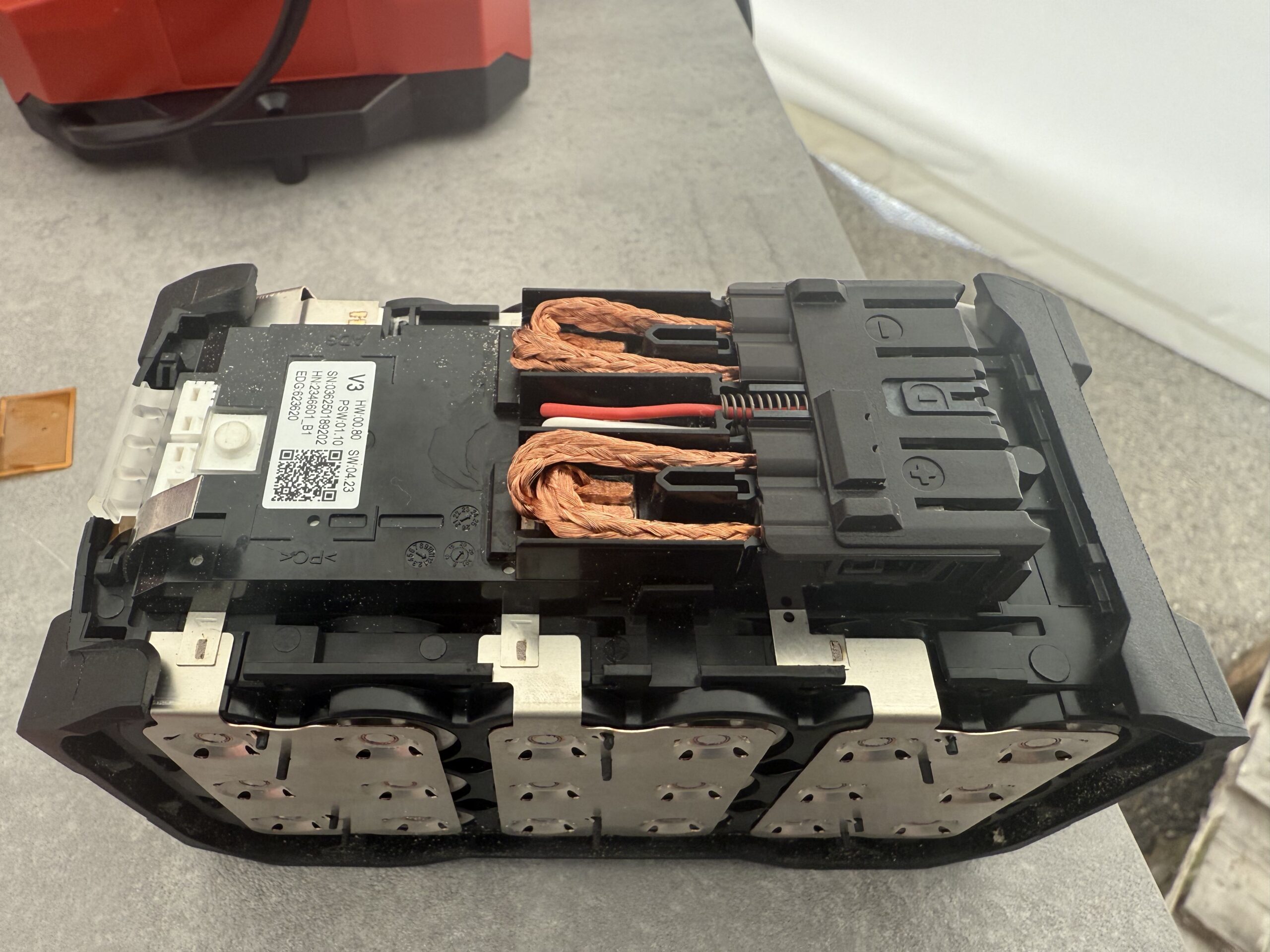
That’s not a marketing trick; it’s engineering discipline. Hilti uses the best cells and chemistry available for power tools, and is committed to the interface over the long run. The company's use of 21700 cells is a great example of their commitment. Nuron is built with premium high capacity and high power cells, and large 12 gauge braided wire for greater power transfer and lower resistance - all in a future-proof interface that moves power efficiently without creating excess heat.
Other manufacturers tried to solve the problem by stacking cells and raising voltage. Hilti solved it by improving energy transfer. The result is a cleaner, cooler, and more efficient power system that scales across every tool category without compromise.
In short:
That’s the difference between designing for the trades and designing for sales. Hilti built for the long game.
Inside the Nuron Battery: Built Different
Hilti didn’t just throw a new label on an old design. Every inch of the Nuron battery was re-engineered from the inside out to handle more current, more vibration, and more abuse than any other pack on the market.
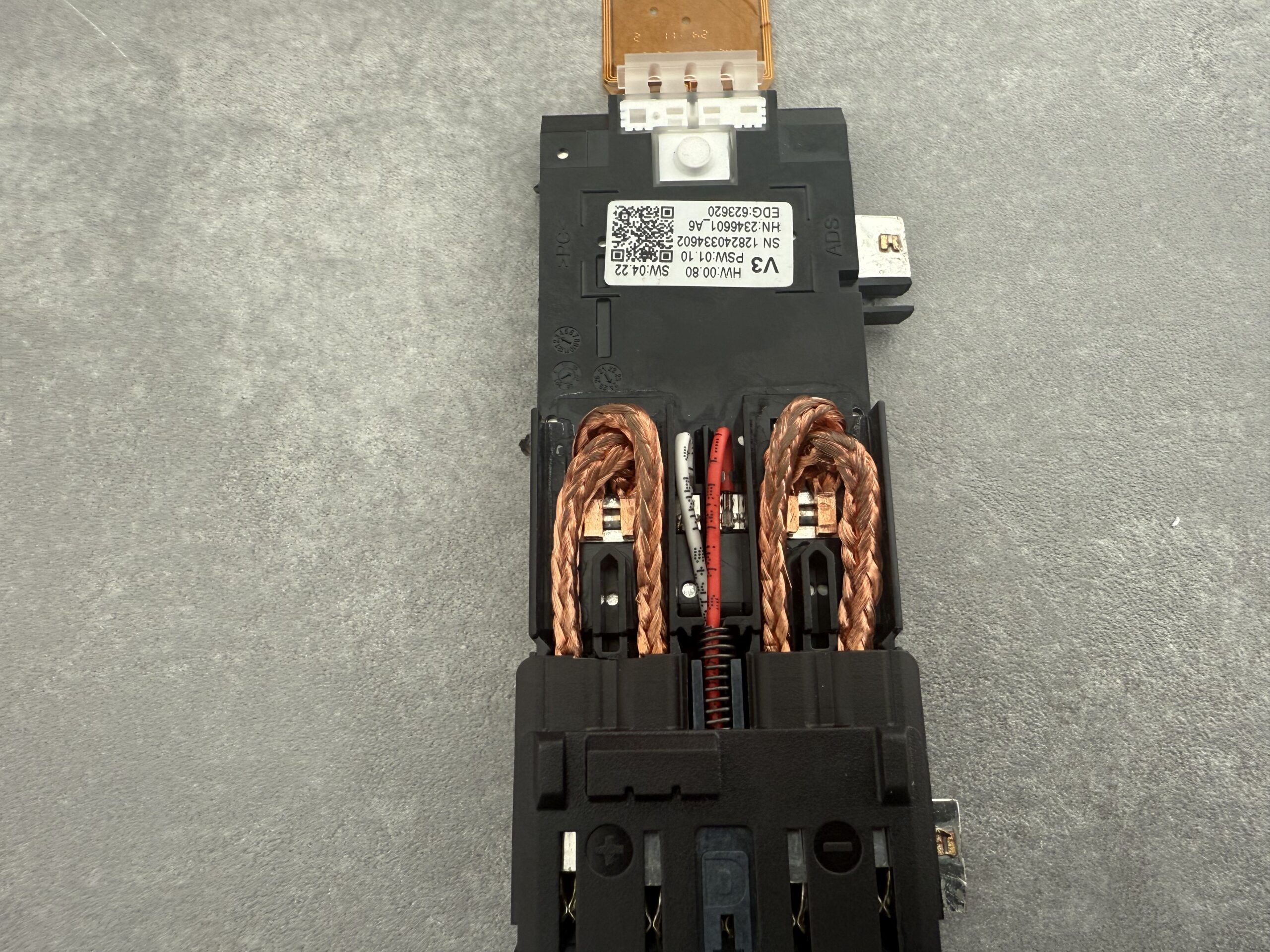
12 Gauge Braided Power Wiring – Built for Flow, Not Heat
Inside each Nuron pack is a thick braided copper conductor, not the thin, flat tabs you’ll find in cheaper batteries. This moves current more efficiently, letting power flow freely while minimizing resistance and heat build-up. It’s the same idea as using a thicker gauge wire on a high-amp circuit: less resistance, less heat, longer life.
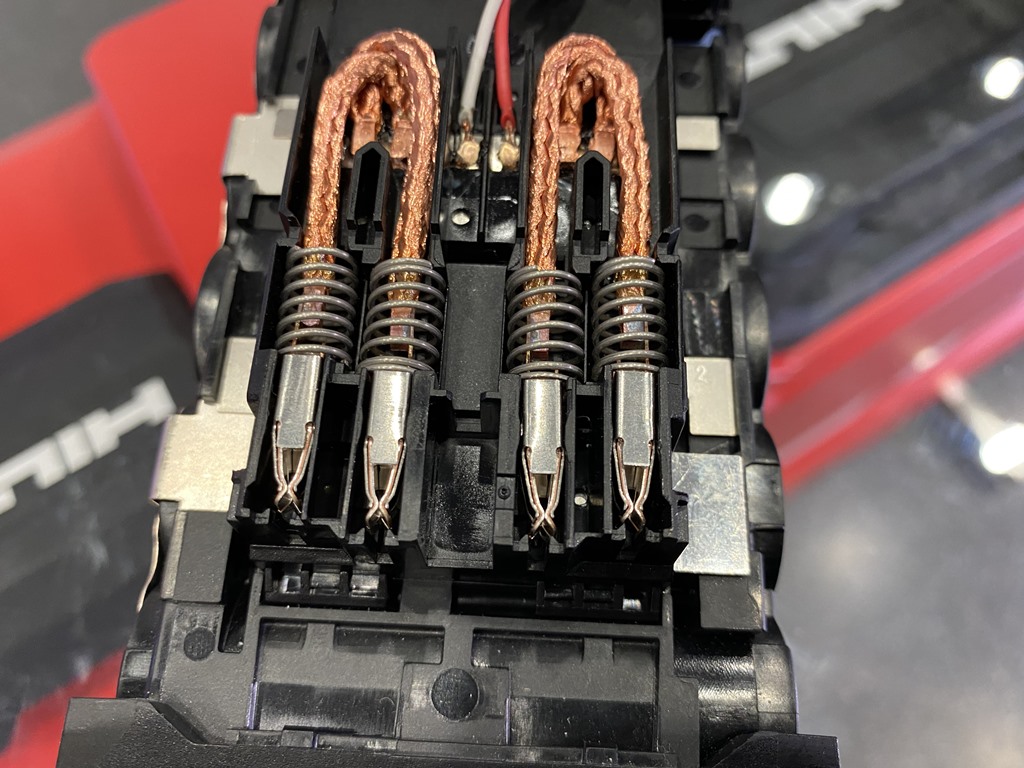
Spring-Loaded Power Contacts
Some brands use two power contacts. For Hilti's bigger batteries, they use four, each one spring-loaded and coated to reduce electrical resistance and maintain constant contact under vibration. Because the contacts are thicker and coated, they reduce resistance even further.
Think of it like a four-lane highway instead of a two-lane road, more current can flow at once, and the connection stays tight even when the tool is shaking. That means steady power delivery, less heat, and no micro-disconnects that rob torque or trip thermal protection.
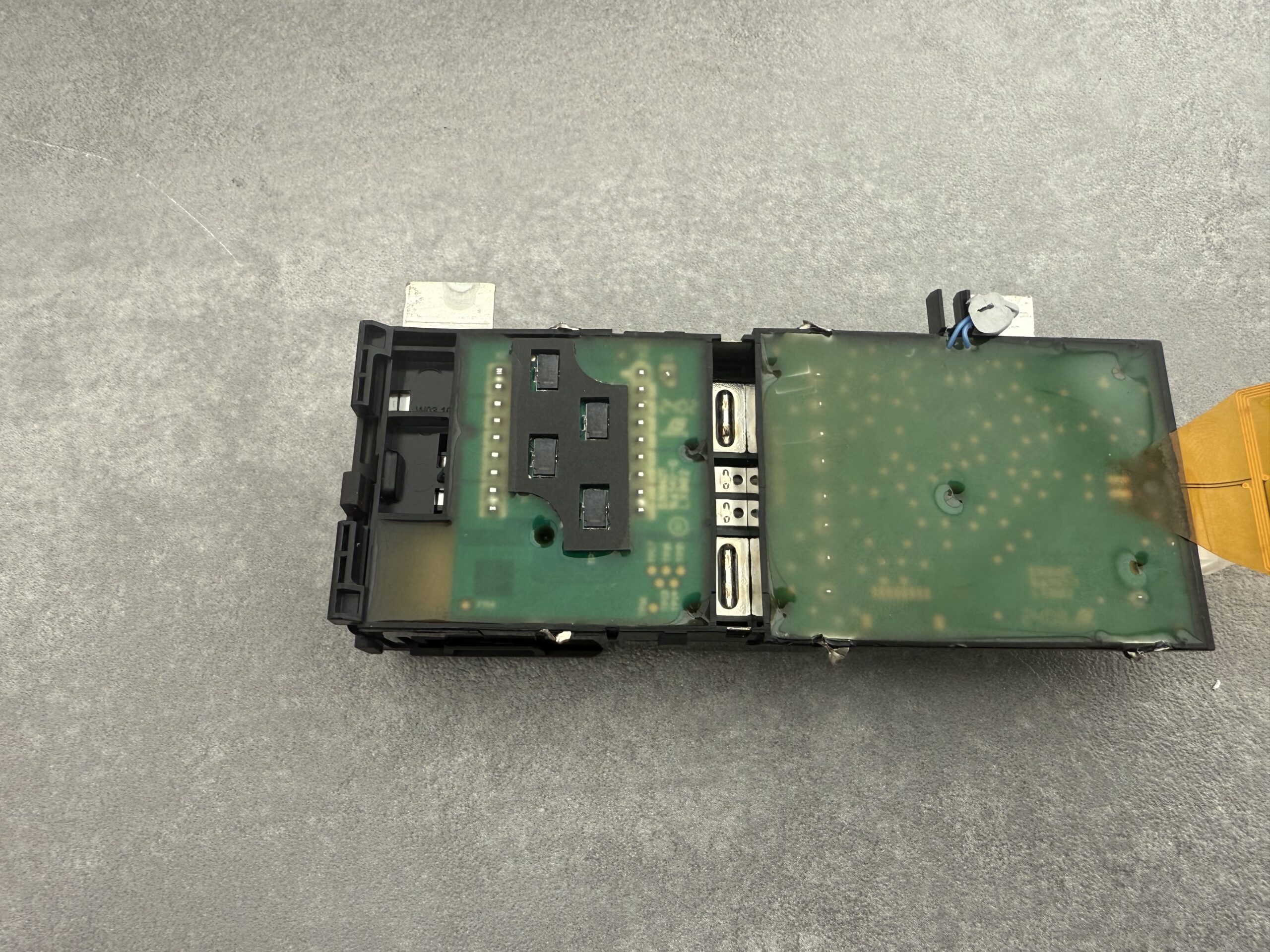
Fully Potted Electronics – Total Sealing
The brain of the battery, Hilti’s battery management system (BMS) is completely potted in a protective compound. That means every electronic component is sealed against dust, moisture, and vibration.
It’s an expensive process most competitors skip, but it’s the reason Hilti packs survive in rain, mud, or freezing cold when others short out or fail.
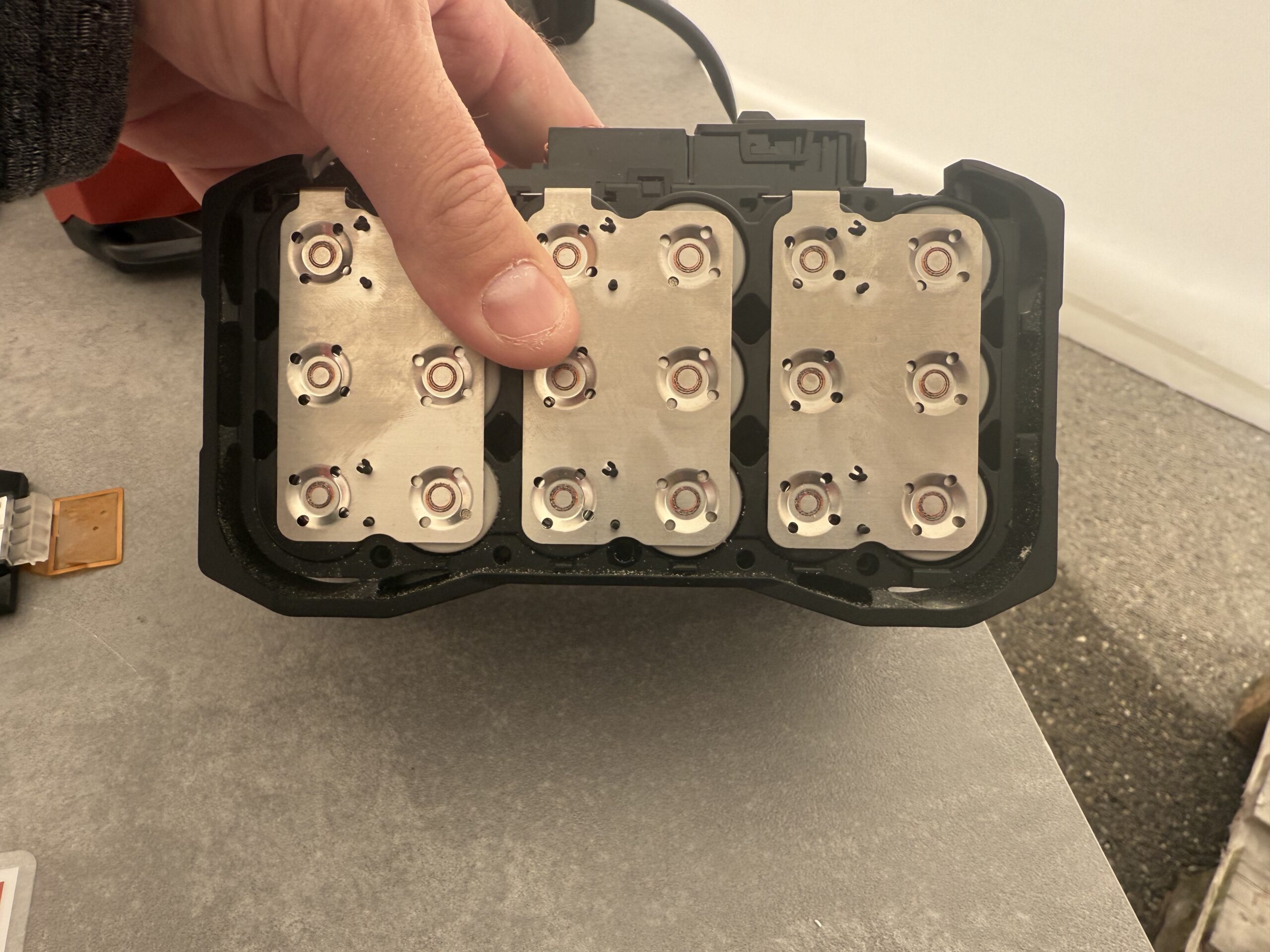
Bumper Structure and Tether Anchor
The outer shell of every Nuron pack is reinforced with a bumper structure that absorbs impacts and prevents casing cracks when dropped. It also serves as an anchor point for a tether, so crews working at height can secure the pack and tool safely.
Again, it’s the kind of detail that costs more to make and exactly why Hilti batteries outlast most other jobsite brands.
Built for the Real World
Between the thicker internal wiring, thick coated spring loaded contacts, sealed electronics, and impact-ready casing, Nuron batteries aren’t just made to power tools, they’re made to survive the kind of environments where those tools actually live.
Real Power: Why Voltage Numbers Don’t Tell the Whole Story
Walk down any tool aisle and you’ll see the same sales pitch - “More volts = more power.”
It’s catchy, but it’s not true. Power isn’t just about voltage; it’s about how efficiently that energy moves from the cells to the motor.
Hilti’s Nuron system proves the point. It runs on 22 volts, yet it can drive the same demanding tools that other brands need 36V, 40V, 60V or even 72V platforms for. How? Hilti focused on energy transfer, not headline voltage numbers.
Power Comes from Flow, Not Just Pressure
Think of voltage like water pressure; it only matters if the pipes can handle the flow.
Hilti built its “pipes” bigger and smarter:
- Thicker braided internal conductors reduce resistance and heat.
- Four heavy-duty, coated terminals move current faster and cooler than standard two-contact designs.
- Advanced cell balancing and BMS control make sure every cell contributes evenly instead of overheating or dropping out.
That’s why Hilti’s 22V packs can push sustained high current to tools that would choke a Milwaukee M18 or a DeWalt 20V MAX pack under the same load. Those brands had to invent new high-voltage lines, MX Fuel, FlexVolt, XGT, just to keep up.
Efficiency Beats Raw Voltage
When a tool pulls heavy current, poor connectors and thin wiring waste power as heat. Every degree of heat is lost energy and shorter runtime. Hilti’s efficient energy path means less loss, cooler operation, and true usable power at the tool, not wasted watts inside the battery.
The Real-World Result
A 22V Hilti breaker or saw delivers consistent torque, longer runtime, and faster recovery because it’s not fighting its own resistance. Higher-voltage systems can’t match that stability without massive battery packs, added weight, or complex electronics. Hilti kept it simple: design it right the first time, make the energy flow cleanly, and the volts will take care of themselves.
Heat, Vibration, and Performance Management
Every battery fails for one of three reasons - heat, vibration, or abuse. Hilti designed the Nuron system to laugh at all three.
Fighting Heat Before It Starts
Heat is the silent killer of every lithium-ion pack. When cells get hot, performance drops, resistance climbs, and lifespan gets shorter. Most brands treat that as an afterthought; Hilti built around it from day one.
Inside every Nuron battery, braided copper conductors and thick bus bars move current freely, so less energy is wasted as heat. The spring-loaded power contacts stay tight even under hammer-drill vibration, keeping the connection solid and temperature low. And when charging with the new Nuron batteries, Hilti’s flash-charging system (dual charger) uses multiple fans to actively cool the packs, one cooling each battery and one cooling the converter section, so you can throw a hot battery on the charger right after use without waiting for it to cool down.
While other systems throttle or shut off to protect themselves, Hilti keeps charging and working. That’s not marketing fluff, that’s thermal engineering done right.
Built to Handle Constant Vibration
Jobsite tools don’t live easy lives. They’re slammed into concrete, run in freezing cold, and dropped off scaffolds.
Hilti’s spring-loaded contacts slide with the vibration rather than losing grip, so power never cuts out. The fully potted electronics absorb impact and isolate delicate circuits from shock. Where most batteries fail from cracked solder joints or loosened contacts, Hilti’s sealed interior keeps everything locked in place.
Smart Battery Management
The brain of the system, Hilti’s Battery Management System (BMS), constantly monitors temperature, voltage, and current. If a cell bank starts to rise in temperature, it automatically redistributes load and limits output before failure. This isn’t the simple thermal cutoff you see in lower-end batteries; it’s active, adaptive control designed to maintain full output as long as possible without risking damage.
Cooler Battery, Longer Life
Because Nuron batteries stay cooler and connected, they last longer, plain and simple. That means less downtime, fewer replacements, and tools that keep performing even in the middle of summer on a hot deck or rooftop.
Fast, Smart, and Connected Charging
A battery system is only as good as its chargers and Hilti didn’t overlook that.
Most chargers are dumb bricks with a light that turns green when it’s done.
Hilti’s Nuron chargers are more like miniature power stations, with active cooling, dual converters, built-in connectivity, and boost charging logic that work together to keep batteries in rotation instead of sitting idle.
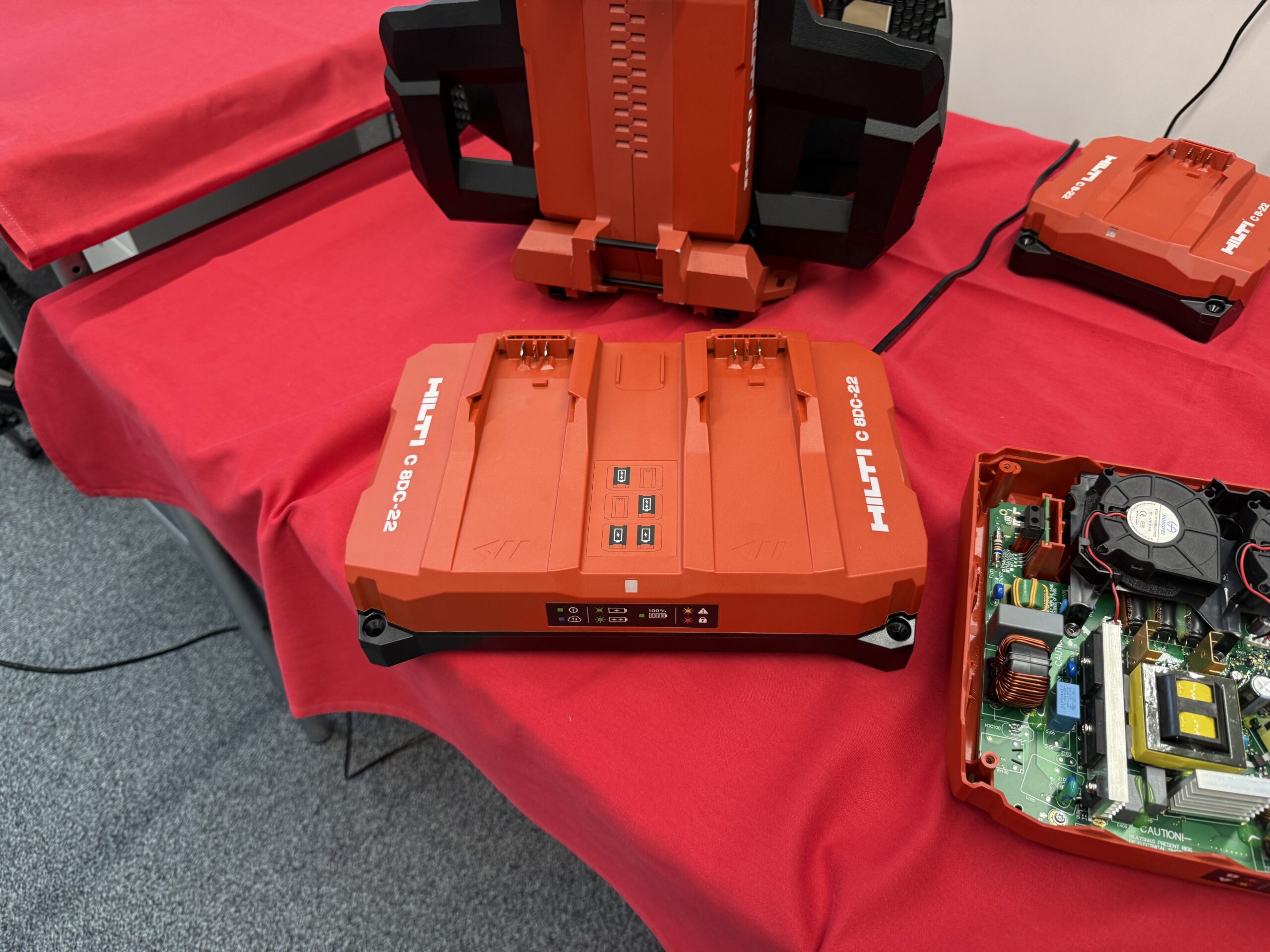
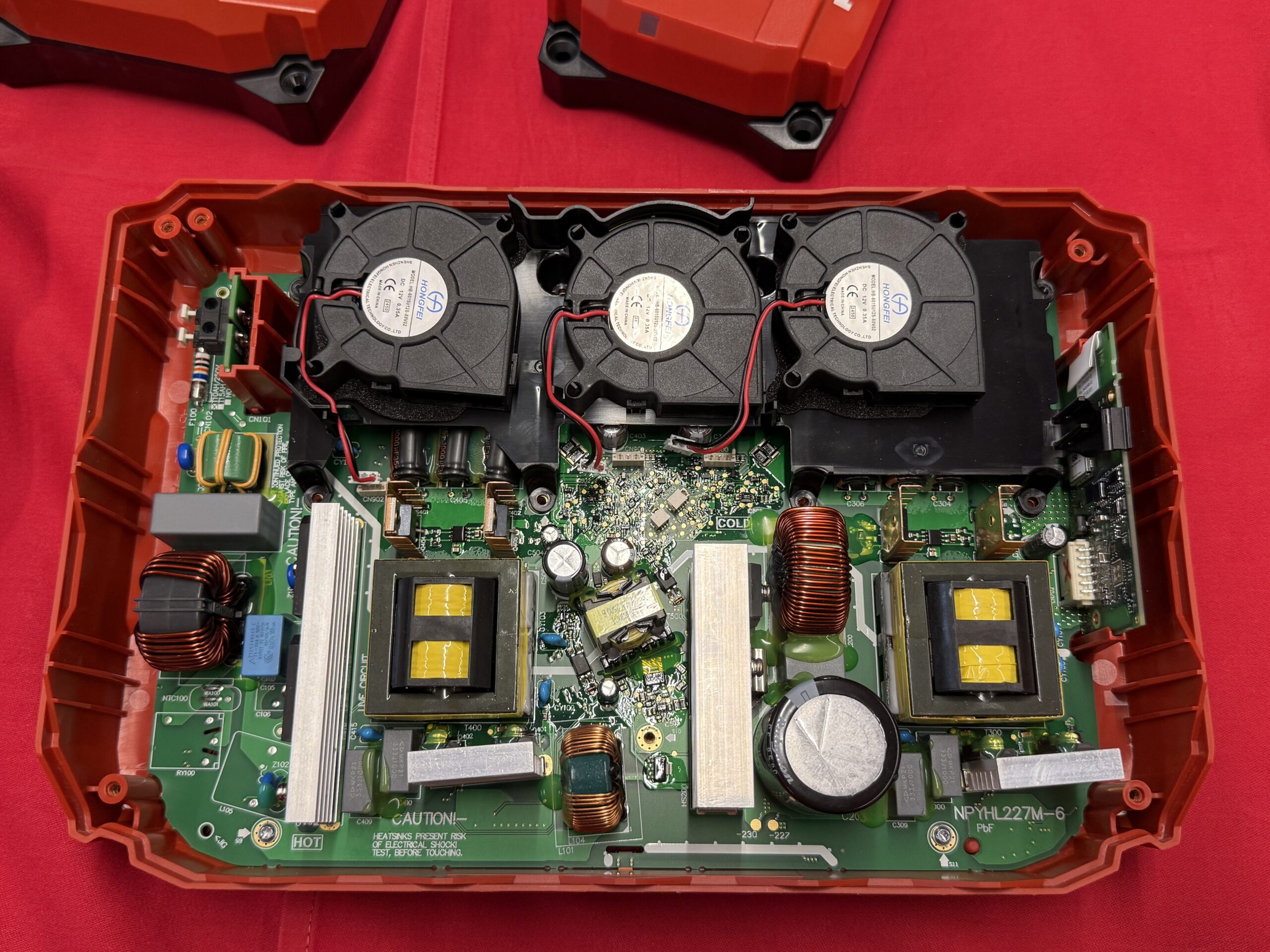
Dual Converter Design
The C 8DC-22 Dual Bay Flash Charger houses two independent converters. When you slot in one battery, both converters combine their output to charge it faster. Drop in a second pack, and each converter runs individually. It’s an intelligent load-sharing design that automatically adjusts to whatever you throw at it, no switches, no settings, just speed.
Triple-Fan Cooling
Hilti built three fans into its flash chargers, one to cool each battery and one to keep the converter's section cool. This isn’t gimmickry; cooler electronics push more current safely.
You can place a hot pack straight from a breaker or grinder onto the charger, and it’ll pull the temperature down fast enough to begin charging immediately. Other brands tell you to “let the battery cool first.” Hilti engineered the charger to handle the heat instead of handing it to you.
Boost Mode
Hilti’s high-capacity packs, the B 22-260 and B 22-290, feature Boost Mode, a built-in handshake between pack and charger that pushes charge rate to the limit while keeping cells within spec. In plain English: 80 % charge in about 20 minutes without cooking the cells. That’s runtime back in rotation before most crews finish a break.
Cloud-Connected Intelligence
Every Nuron charger also serves as a data gateway. When a battery docks, usage data, cycles, temperature, and tool pairing information are uploaded automatically to Hilti’s cloud, feeding ON!Track and Fleet Management.
No Bluetooth, no manual scan, no app fiddling. Your tools and batteries quietly log their own work history every time you charge them.
Fleet-Scale Power
For larger operations, Hilti offers the CID 4-22 Docking System and the CL SPB 12 Smart Power Bar a modular setup that can charge up to 48 batteries at once. It’s designed for jobsites and service centers where downtime costs money and organization matters.
Battery Lineup Breakdown
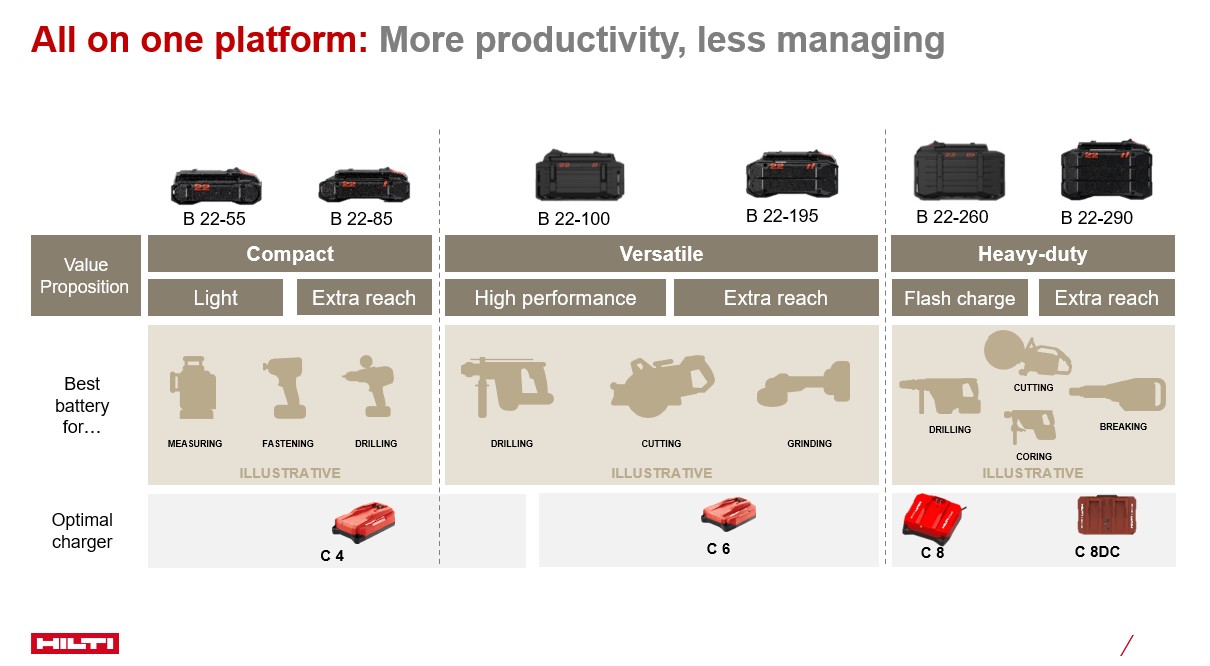
Hilti didn’t flood the market with dozens of confusing packs. They built a tight, purpose-driven lineup that covers every trade without forcing you to guess which battery fits what.
Six packs, one platform, all interchangeable across the entire Nuron line.
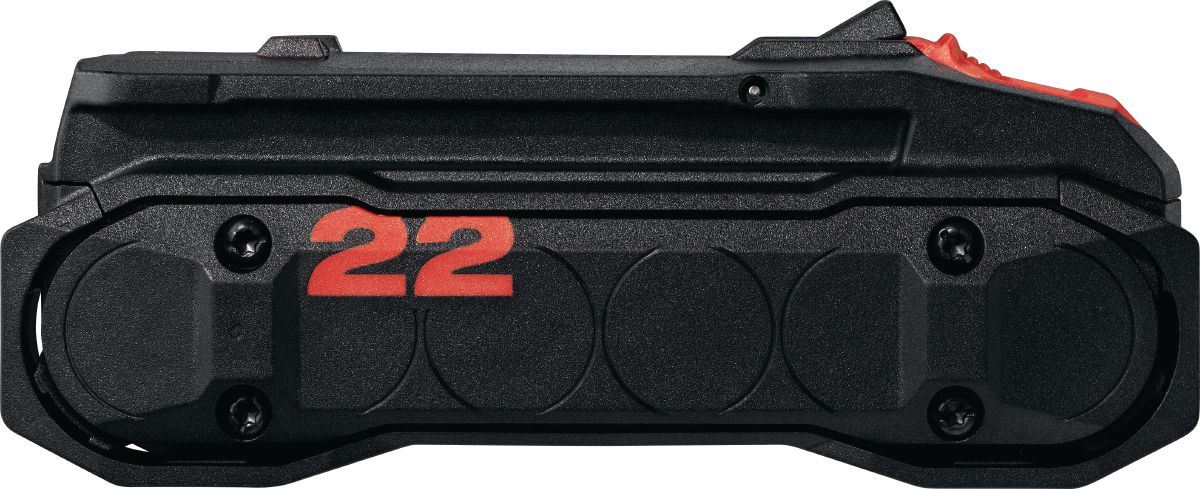
Hilti Nuron B22-55
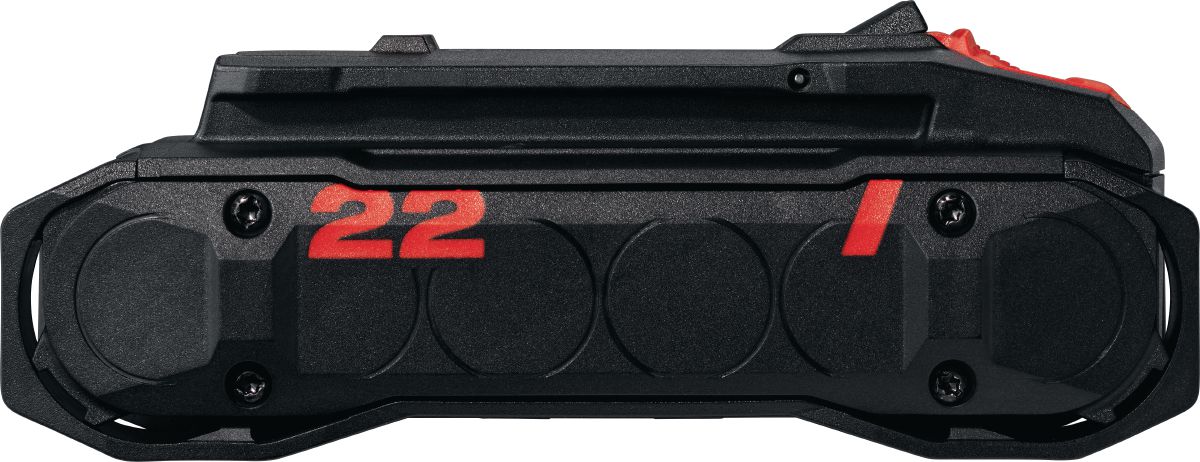
Hilti Nuron B22-85
Compact Performance
B 22-55 / B 22-85
Made for compact drills, impacts, and finish tools where weight matters more than runtime.
- Light and balanced for overhead or detail work.
- Same sealed electronics and durable shell as the big packs.
- Ideal for punch-list and install work where portability wins.
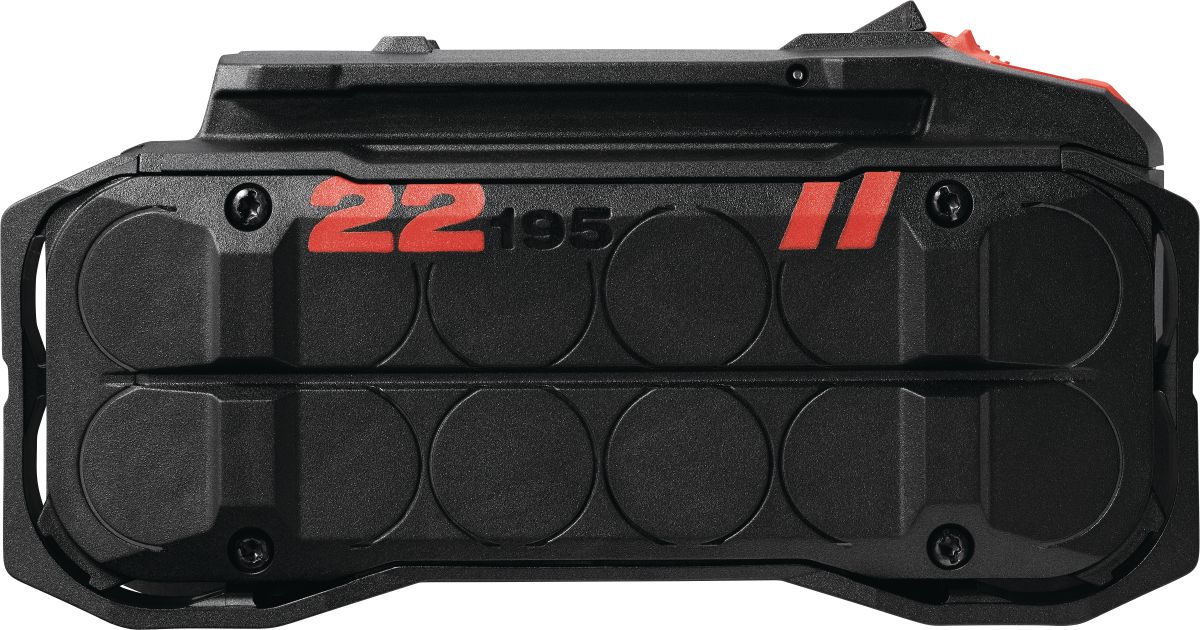
Hilti Nuron B22-195
Universal Workhorses
B 22-100 / B 22-195
The everyday choice for most tradesmen.
- Balanced runtime and power for core tools, saws, rotary hammers, grinders.
- Delivers full Hilti performance without adding bulk.
- Sweet-spot batteries that stay on most tools all day.
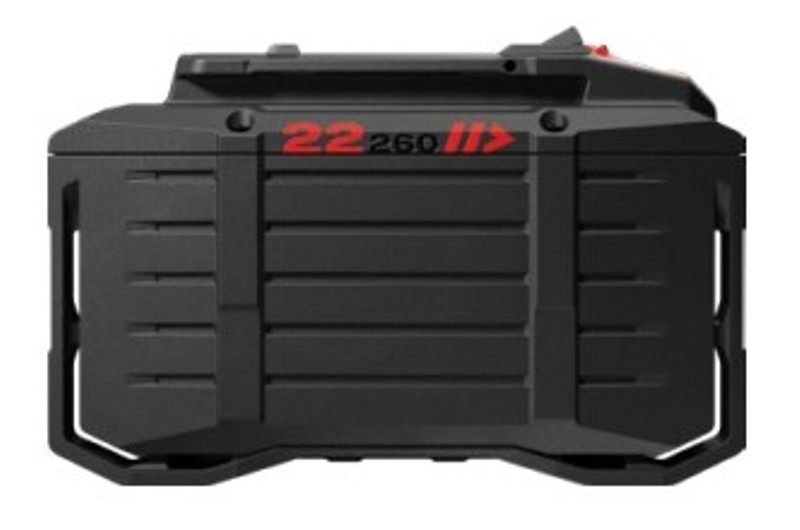
Hilti Nuron B22-260
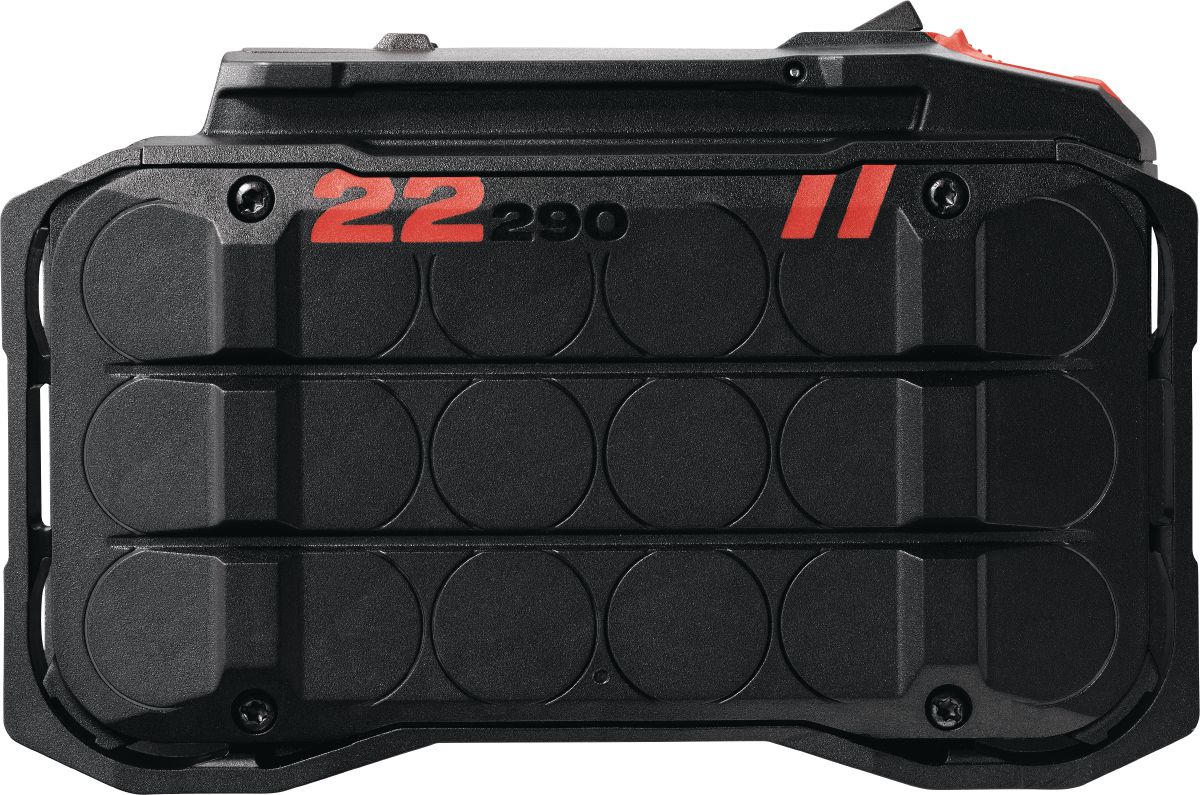
Hilti Nuron B22-290
High-Demand Heavy Hitters
B 22-260 / B 22-290
Built for sustained current draw and long runtime.
- Boost Mode enabled: 80% charge in roughly 20 minutes on Flash Chargers.
- Internal cell spacing and copper conductors handle continuous high load.
- Best choice for breakers, SDS Max hammers, large-diameter saws.
Fleet and Flash Integration
These packs pair perfectly with Hilti’s Flash Chargers and Smart Power Bar systems, keeping big crews moving instead of waiting on slow chargers. Whether you run one cordless tool or an entire jobsite fleet, every battery uses the same charger, same mount, same data system.
No Guesswork
From compact to demolition, every tool uses the same 22V battery base. You don’t need separate chargers or adapters, just grab the pack that fits your workload, lock it in, and go.
Smart Tracking and Tool Management
Cordless tools changed the jobsite. Hilti took it one step further, making the batteries themselves part of your management system.
Every Nuron pack and charger is built with onboard intelligence that automatically records and uploads usage data. The moment you dock a battery on any Nuron charger, it pushes information - cycles, temperature history, charge health, and last-tool connection, straight to Hilti’s cloud. No Bluetooth pairing. No QR codes. No “tap-to-sync.” It just happens in the background.
Integrated with ON!Track
That data feeds directly into Hilti’s ON!Track and Fleet Management platforms, giving you a live look at your inventory, what tools are being used, which batteries are under-performing, and where they were last charged. It’s automatic accountability for large crews and jobsite fleets that usually burn time chasing lost batteries or dead packs.
Maintenance Made Simple
The system can flag packs that are nearing end of life or showing abnormal heat trends long before they fail in the field. That means less downtime and fewer surprises halfway through a pour or roof cut.
Built-In Value for Every User
Even if you’re a one-man operation, that smart tracking still pays off. You’ll know exactly which batteries hold charge longest, which need rotation, and how efficiently your tools are running. It’s the same technology Hilti’s fleet customers use, scaled down automatically for individual users.
Built for the Toughest Jobsites
The Nuron battery isn’t a showroom piece. It’s built for concrete dust, rain, vibration, and the kind of abuse that chews through most cordless packs in a few months. I know we talked about some of these items earlier but it's that important and one of the reasons, no other brand can match Hilti's Nuron system.
Fully Potted Electronics
Every circuit and connection inside a Nuron battery is fully potted, sealed in resin to lock out dirt, water, and vibration. That process is expensive and time-consuming, which is exactly why most brands don’t bother. Hilti does, because a battery that dies in the middle of a pour or on a windy scaffold isn’t an option.
Bumper and Anchor Design
Each pack is wrapped in a reinforced bumper structure that absorbs drops and protects cell banks from direct impact. That same frame doubles as a tether anchor, letting you secure the pack when working at height. It’s a simple, smart detail that keeps crews safe and tools off the ground.
Sealed for the Elements
Jobsite dust and moisture are battery killers. Nuron’s enclosure is gasketed and reinforced so grit can’t reach the electronics.
Rain, snow, or wash-down, it keeps running.
Real-World Tested
Hilti designed these packs for the places most tools fail: concrete dust zones, steel decks, tunnels, and demolition work.
Nothing fancy about it, just brute reliability engineered in.
Why Hilti Outpaces Every Competitor
Every brand claims to build “pro-grade.” But when you open their batteries and look at what’s actually inside, the story changes fast.
Milwaukee
Milwaukee’s M18 line built a solid following, but its limits show up the moment the amps climb. Under heavy load the pack builds heat fast, and thermal shutdown isn’t rare. That’s why they had to create MX FUEL, a whole new voltage line just to run tools that draw more current. Instead of solving the problem, they sidestepped it, leaving users with two ecosystems and twice the cost.
DeWalt
DeWalt went the same route. When its 20V MAX packs started choking on higher-demand tools, it launched FlexVolt 60V. On paper, that sounds powerful; in practice, it split the platform. Users ended up juggling incompatible chargers and battery formats. The system got heavier, bulkier, and less efficient, a patch, not progress.
Makita
Makita’s situation is even messier. Between LXT 18V, dual-battery 36V, and XGT 40V, you need a flowchart to know what fits what. Each jump costs money and shelf space. And while Makita makes solid tools, its batteries still rely on traditional tab wiring and minimal sealing, not the level of protection or current flow Hilti builds in as standard.
Hilti’s Different DNA
Hilti didn’t chase voltage headlines or shortcut design to hit a price point. They engineered from the cell up, braided conductors, potted electronics, coated four-contact terminals, triple-fan cooling, and a single 22V backbone that powers everything.
Where other brands keep inventing new lines to hide old limitations, Hilti keeps improving one system that already works. That means:
- One platform for every trade and every tool.
- Zero lost compatibility when new tools drop.
- Real durability, not marketing-brochure promises.
Built on Engineering, Not Advertising
Other companies spend fortunes telling you their battery is “revolutionary.” Hilti spends that money on materials, R&D, and testing. That’s why Nuron batteries survive falls, heat, and vibration that leave others dead. It’s why Hilti tools stay productive on jobsites where lesser packs shut down.
In the end, every competitor built a battery line. Hilti built a system, and that’s the difference between hype and heritage.
If you still think this is all marketing talk, watch the video above. In this heat test, identical current is run through multiple batteries from different brands. Hilti’s Nuron pack, shown on the far left, stays dramatically cooler, while the competitors on the right light up with visible heat buildup.
That’s what efficient energy transfer looks like. Hilti’s internal braided wiring, coated terminals, and advanced thermal control keep temperatures low and performance steady. The others? They’re wasting energy as heat, and heat is the first sign of inefficiency.
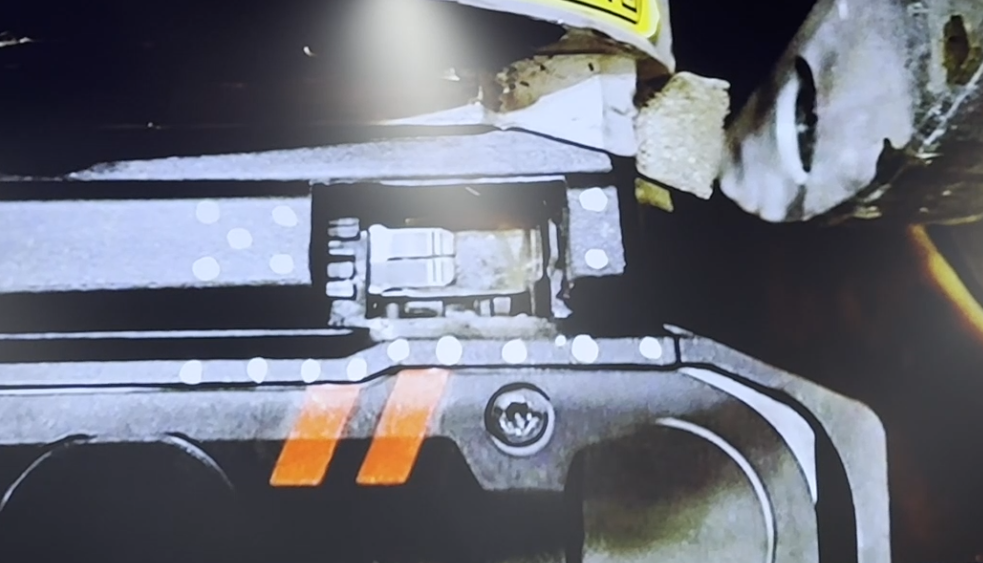
The next video shows it in slow motion, the Hilti tool running under vibration and impact while the battery connection stays locked in place. You can clearly see the spring-loaded contact system doing its job. Instead of rigid terminals that flex apart like most brands use, Hilti’s four spring-loaded contacts move with the vibration, keeping constant pressure between the battery and tool. That means no arcing, no power drop, and no heat from loose connections.
Future-Proof Power
Battery technology is moving fast, higher-draw motors, smarter electronics, and new materials every year. Most brands are racing to catch up. Hilti already built for it.
Because the Nuron system moves current more efficiently and runs cooler, it has headroom. That means as tools evolve and demand more energy, Hilti can keep using the same 22-volt architecture without forcing you to buy into another “next-gen” platform.
When Milwaukee pushes past what M18 can handle, they’ll need another line. When DeWalt’s 60V FlexVolt starts to show its thermal limits, they’ll have to re-engineer. Hilti won’t. The foundation is already there: thicker conductors, multi-contact interface, active cooling, and smart management that can scale with stronger motors and higher-capacity cells.
Hilti invested where it matters: the platform, not the marketing. They didn’t chase short-term voltage wars; they designed a system with room to grow. That’s why every Nuron battery you buy today will still fit the next generation of Hilti tools tomorrow, no adapters, no trade-in, no buyer’s regret.
FAQ
With Hilti’s sealed electronics and cooler-running design, expect significantly longer life than traditional packs, often double the cycle count in heavy duty use. The fully potted electronics and active thermal control prevent the heat damage that kills cells in other brands.
Hilti uses four spring-loaded, coated contacts instead of two. That means constant contact under vibration, lower resistance, and no power drop during impact work, something you can see in the slow-motion video section above.
Because power is about current flow and efficiency, not voltage marketing. Hilti’s thicker conductors, braided internal wiring, and four-lane connection allow their 22V packs to outperform many higher-voltage systems without the extra weight or complexity.
Conclusion: One Battery, Every Job
At the end of the day, a cordless platform lives or dies by its battery. Most brands sell a promise; Hilti delivers a system.
The Nuron platform isn’t about flashy marketing or chasing voltage wars. It’s about engineering discipline, thicker conductors, smarter electronics, cooler charging, and a single voltage that powers everything from a drill to a breaker.
While other companies roll out new “next-gen” lines every few years to cover old weaknesses, Hilti keeps improving the one platform that already works.
That means your investment today won’t be obsolete tomorrow. No new chargers, no new adapters, no new excuses, just tools that keep running.
Hilti poured time, money, and research into building the most advanced cordless battery system in the industry. And it shows.
- Cooler under load.
- Smarter in the charger.
- Stronger on the job.
- Connected without complication.
If you judge a platform by what actually happens on the jobsite, uptime, power, and reliability, then Hilti doesn’t just compete; it dominates. One battery. One system. Every job.
